
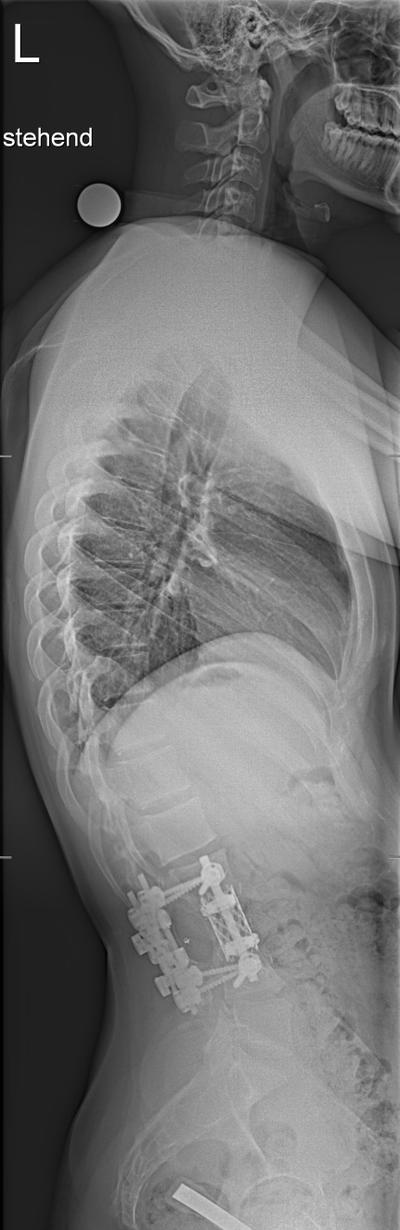
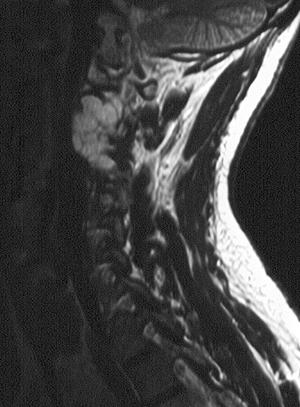
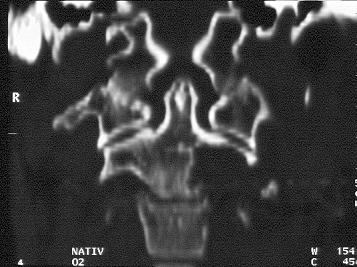
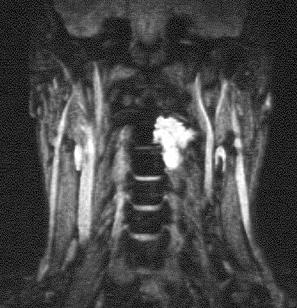
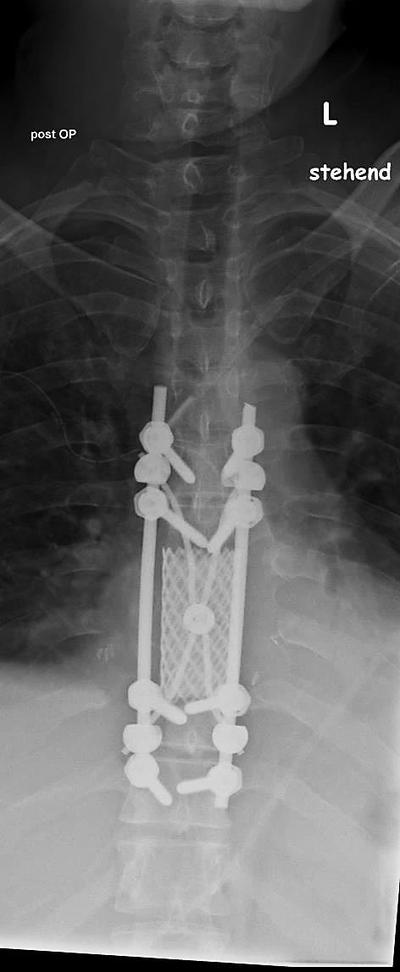
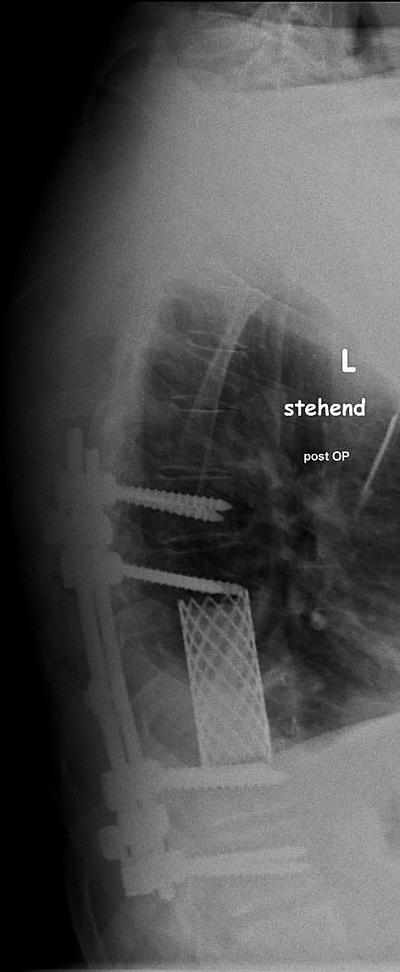
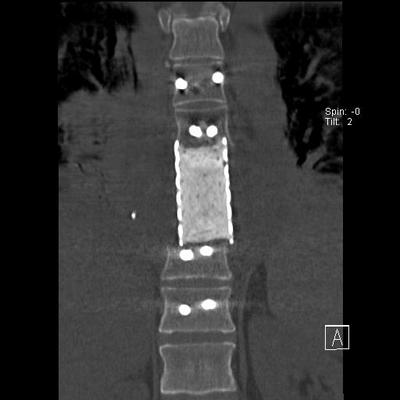
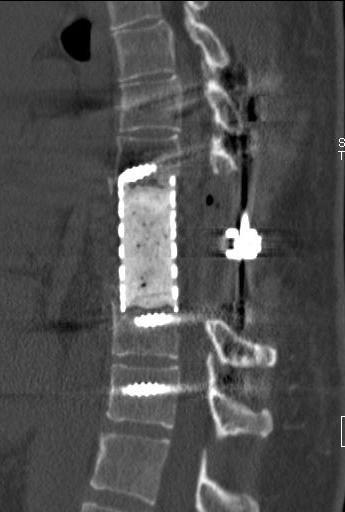
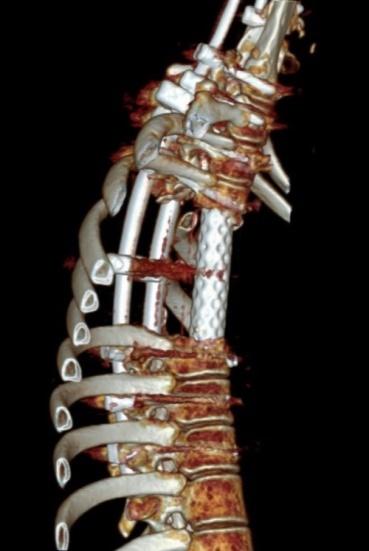

Chirurgisches Management von Wirbelsäulentumoren — primäre Tumoren, Metastasen, En-bloc-Resektionen.
Ioan Branea
Bucuresti Octombrie 2023
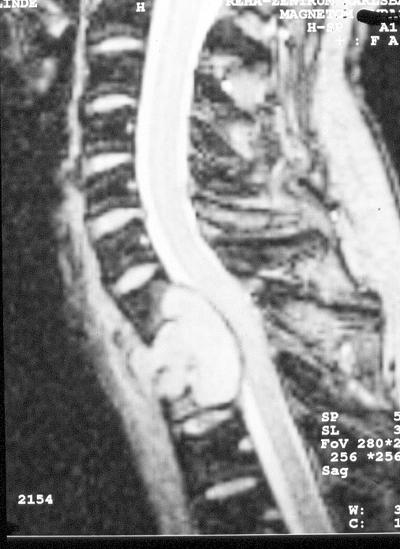
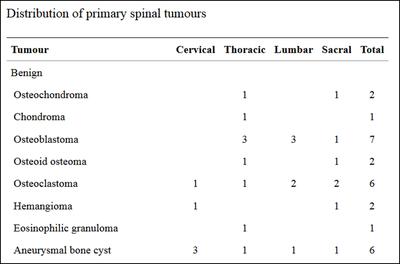
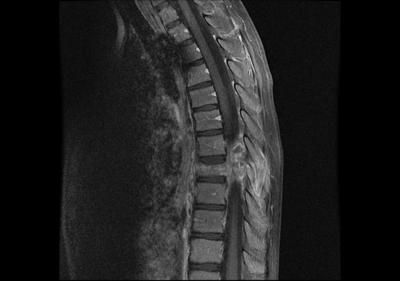
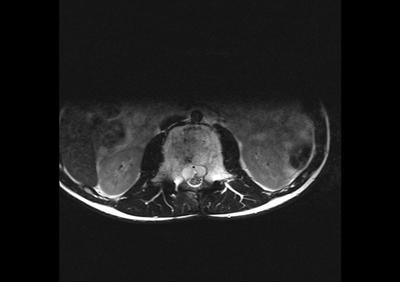
Locations on spine:
2 – 4% of all malign bone tumors
40 – 60% of all bone metastasis
- Osteoid osteoma
- Osteochondroma
- Eosinophilic granuloma
- Aneurysmatic bone cyst
Semimalign - Giant cell tumor
Malign - Osteosarcoma
- Chondrosarcoma
- Ewing sarcoma
- Lymphoma / Plasmocytoma
Spine tumors
Kelley 2007, 42 years register
Developed for limbs, translated to spine
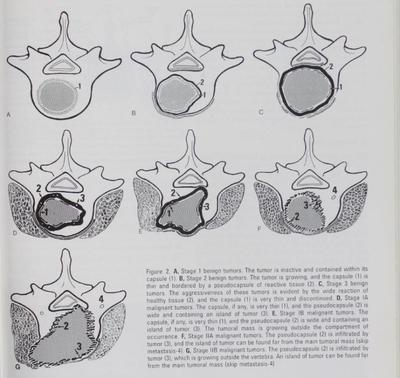
Enneking (Staging), since 1980
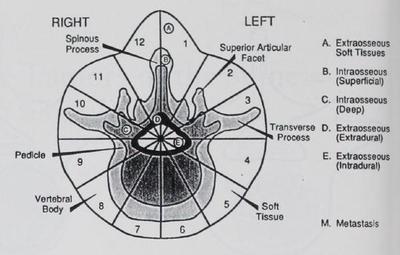
Weinstein-Boriani- Biagini, since 1991
Pain
Presence or risk of neurological deterioration
Instability or deformity
Curative in solitary tumors
Diagnosis in unknown tumors
metastasis
age/general health state/prognosis
Operation planing
primary tumors (malign/benign)
secondary tumors (metastasis)
curative purpose
palliative purpose
- unknown histology (biopsy? / intraop. histol.?)
Localisation - vertebral body - posterior structures - staging
Involvement of vascular structures - resection? occlusion test?
Involvement of adjacent structures - radical resection possible?
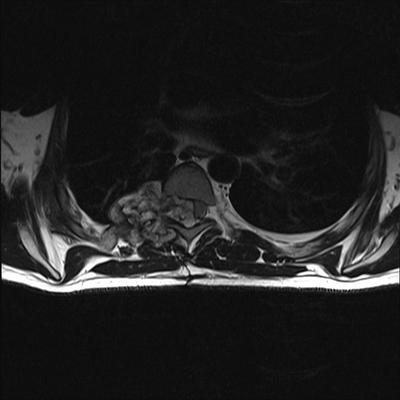
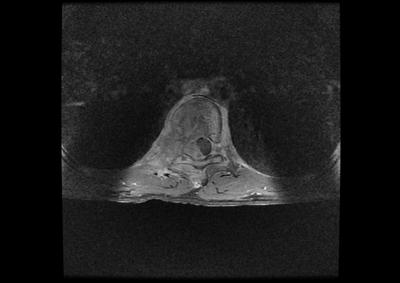
Compression of the spinal cord ?
Aim of surgery - curative - palliative
Operation planing
Seite 10
piecemeal tumor removal
violation of tumor capsule
for metastatic tumors, some benign tumors
higher risk of recurrence
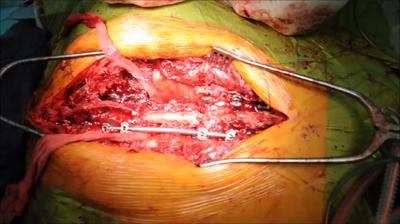
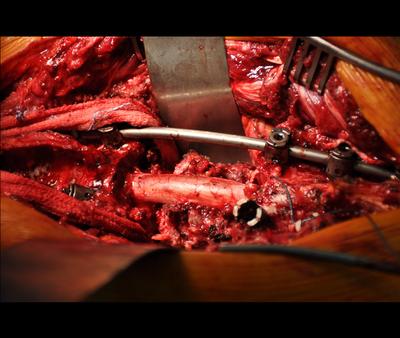
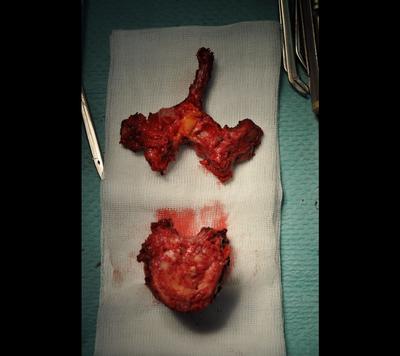
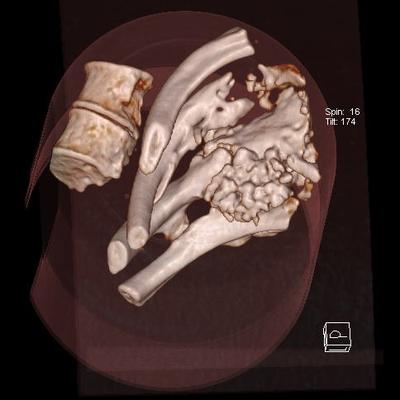
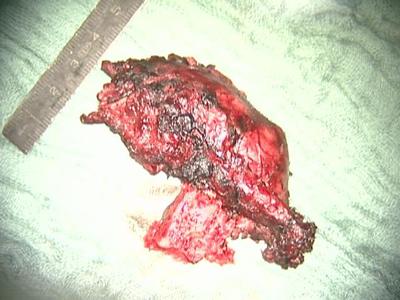
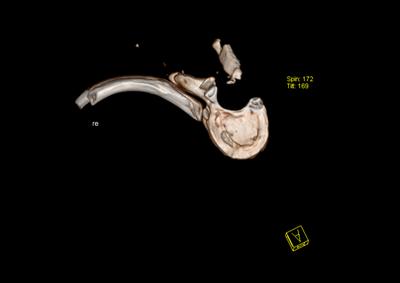
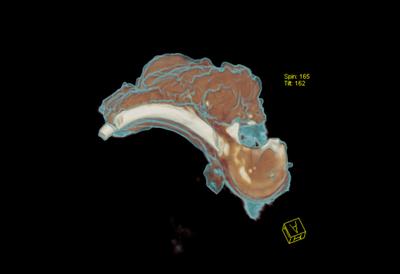
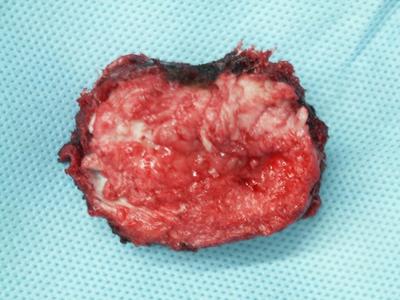
en bloc resection
complete removal without violation of tumor capsuleprimary malignant, locally aggressive tumorsless risk of recurrence
TOTAL EN BLOC: GOLD STANDARD
Gold standard in spinal tumor surgery
00.00.2020
SRH Unternehmen – Max Mustermann
13
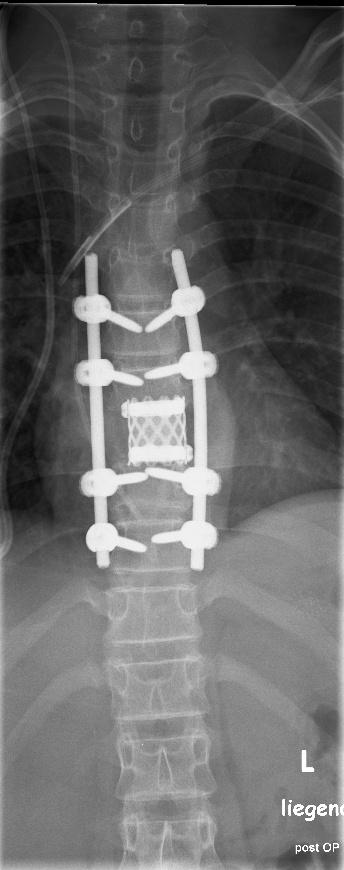
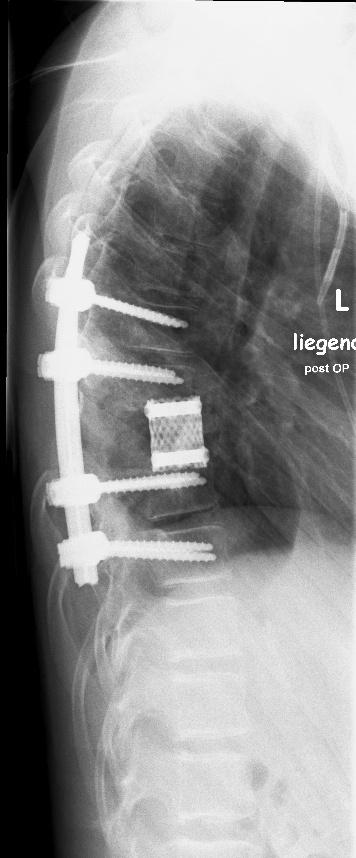
Mechanical Stability after En-bloc Vertebrectomy
Stable in the long run?
Shear forces?
Rotation forces?
Anterior support
Posterior tension band
Rotational stability by blocked facet joints
Fracture treatment
(posterior structures preserved)
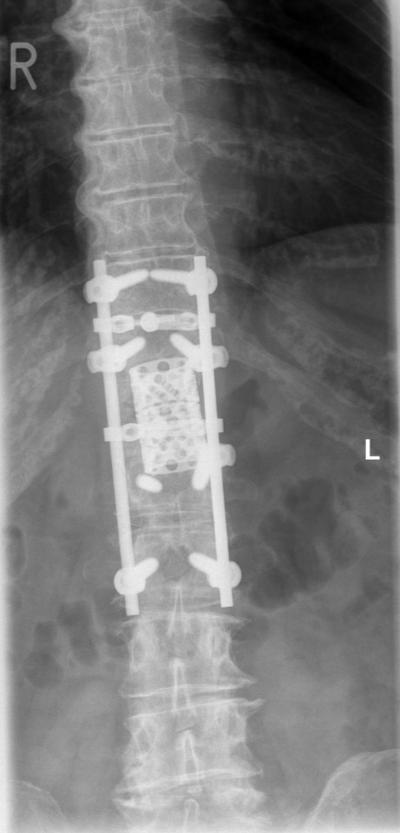
En-bloc vertebrectomy
(posterior structures removed)
Shear forces / Rotational forces:
Compression at adjacent segments blocks the facet joints: fixed angle
Mechanical Stability after En-bloc Vertebrectomy
Shear forces / Rotational forces:
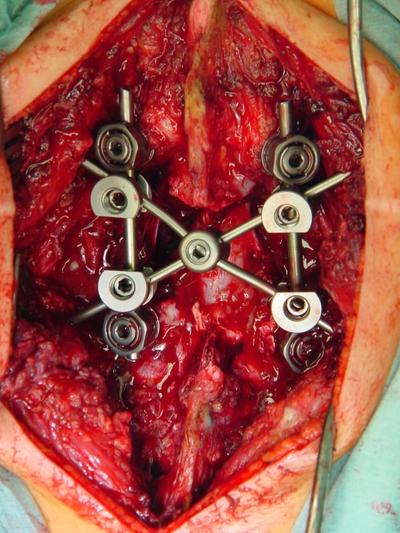
Cross-link connector: fixed angle
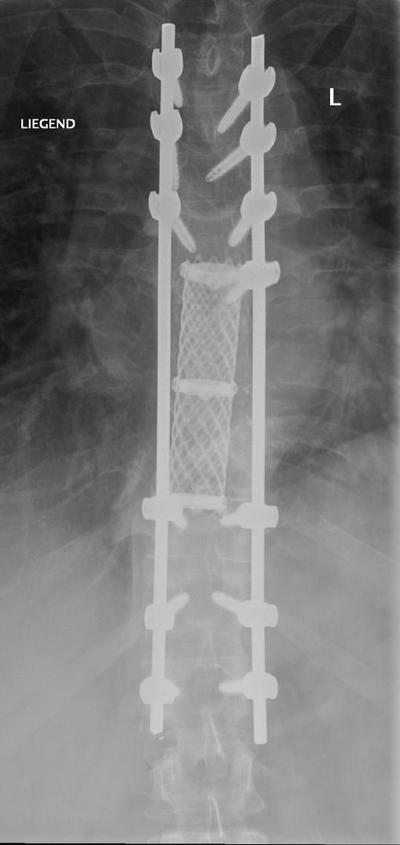
8y / 07-2004
Mechanical Stability after En-bloc Vertebrectomy
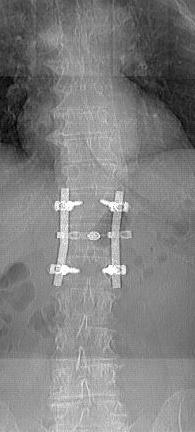
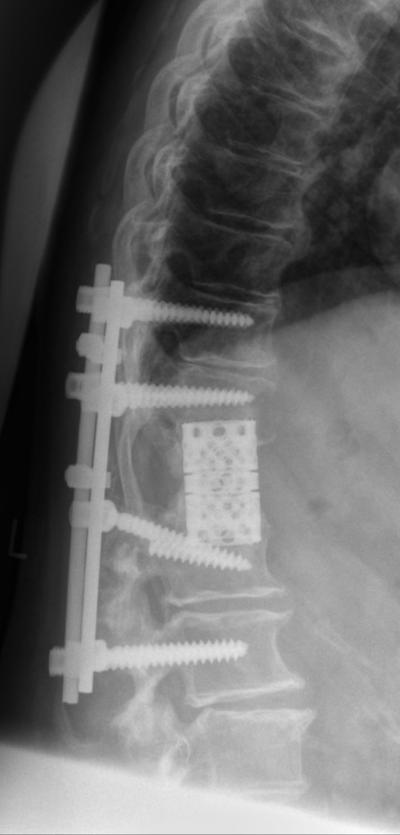
8y, m.
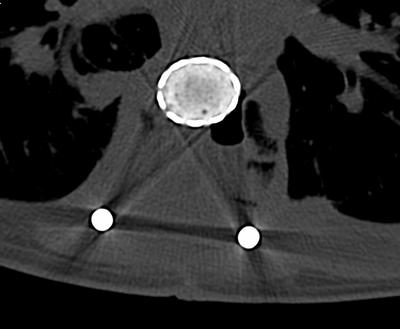
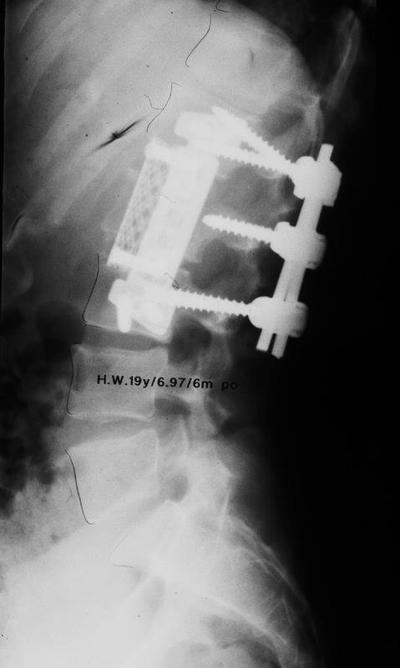
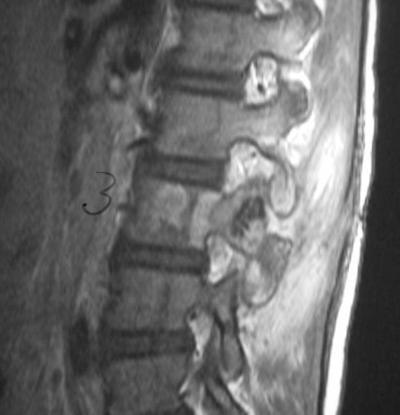
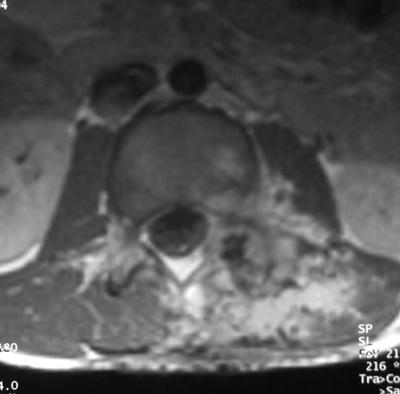
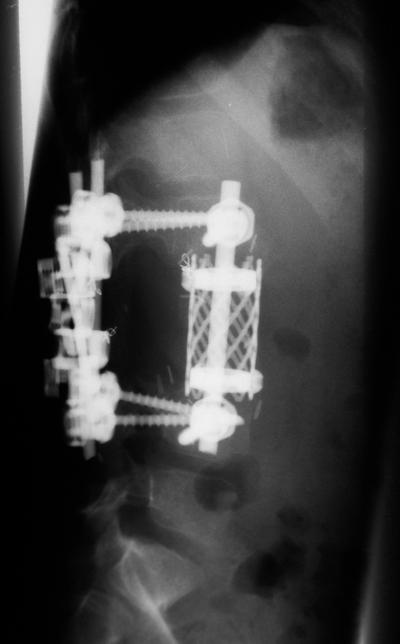
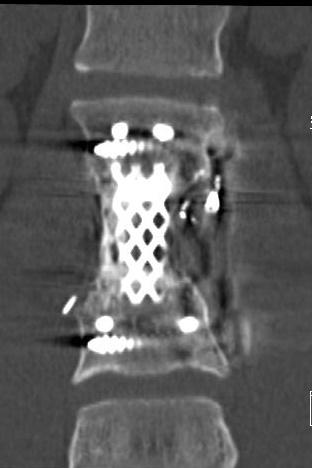
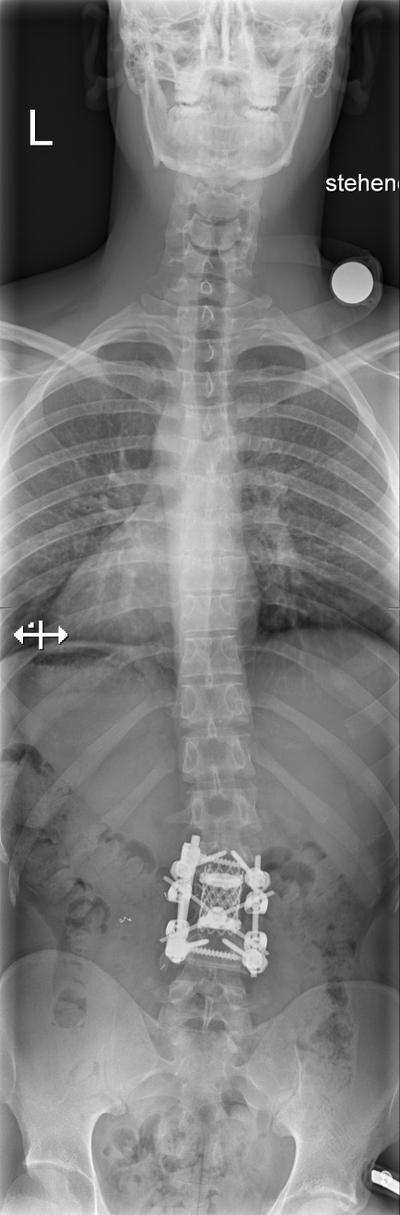
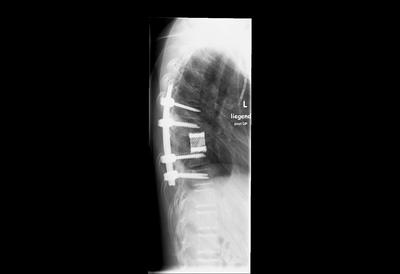
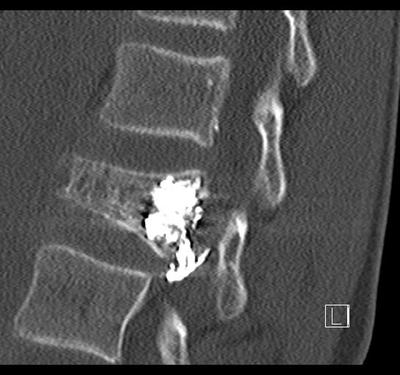
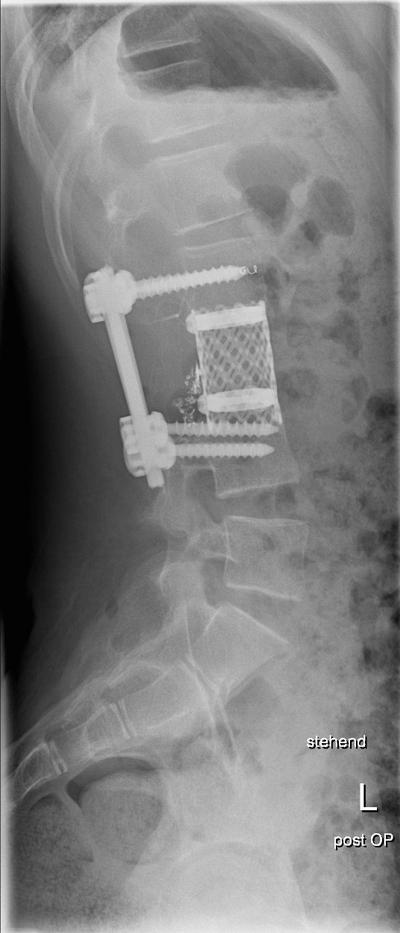
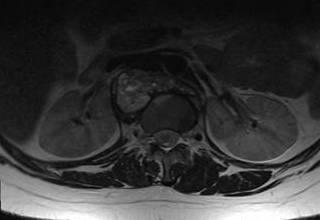
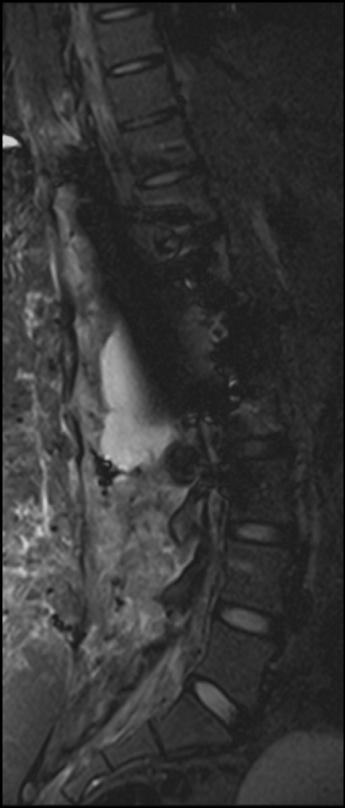
Osteoblastoma L3, status post curettage and filling with calcium sulfate.
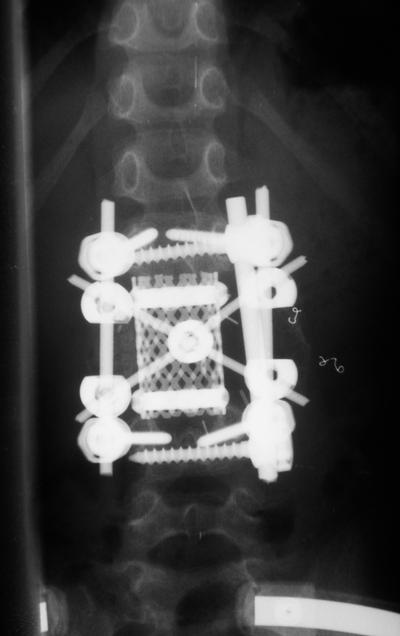
Posterior-anterior-posterior en-bloc resection of L3
Shear forces / Rotational forces:
Cross-link connector: stable angle
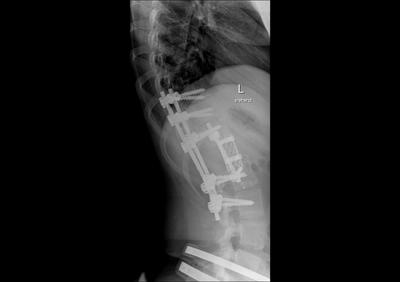
12 yrs. follow-up after en-bloc resection of L3 in a 8 yrs. old boy
17y / 05-2013 / 9y pop.
20y / 05-2016 / 12y pop.
Mechanical Stability after En-bloc Vertebrectomy
Shear forces / Rotation forces:
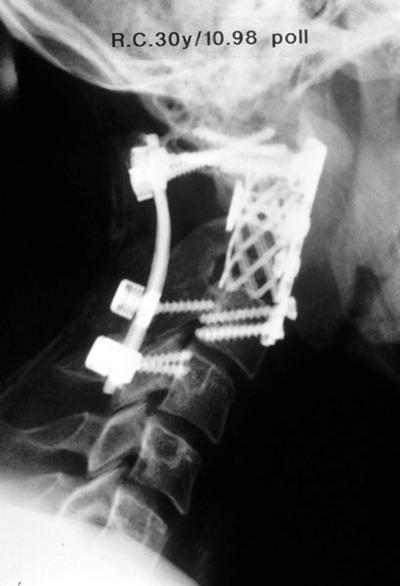
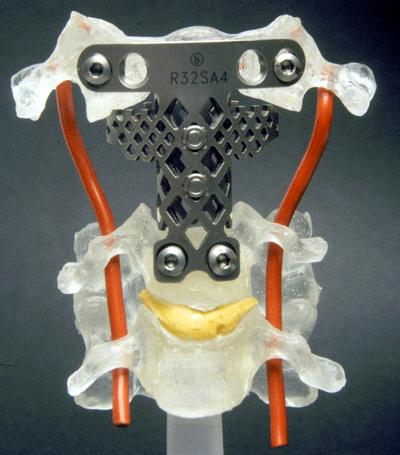
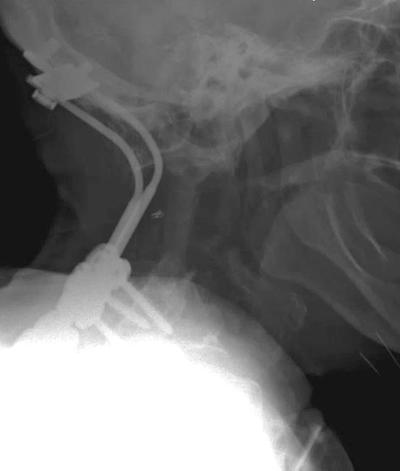
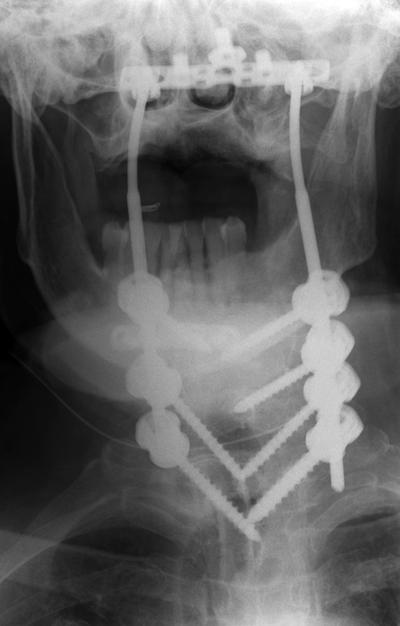
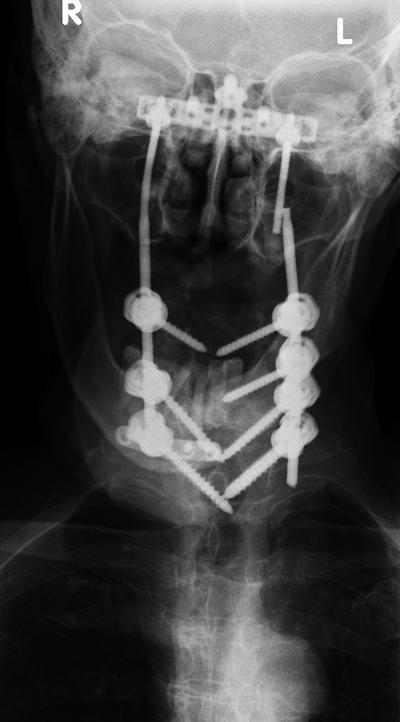
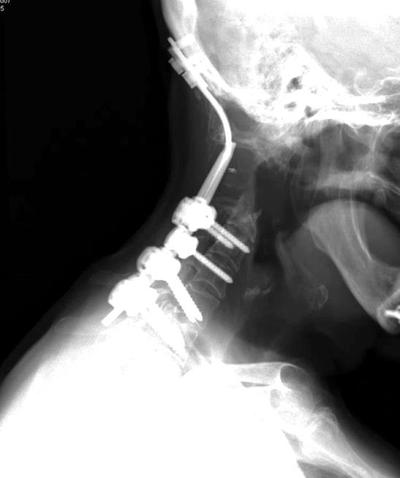
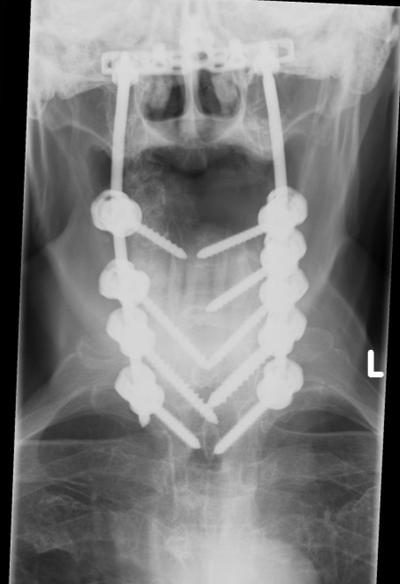
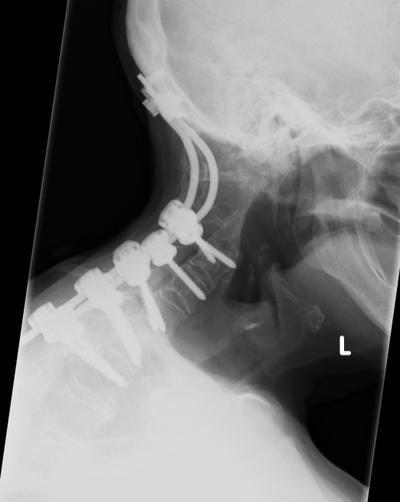
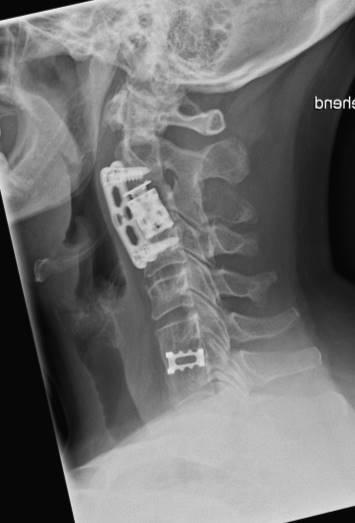
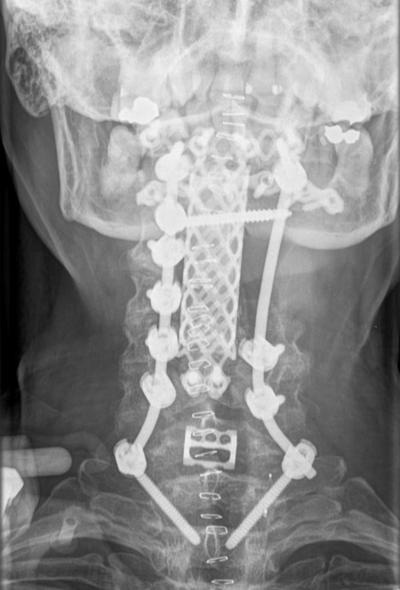
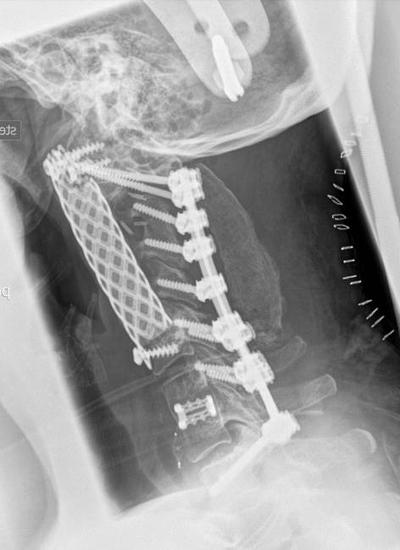
Anterior plate: fixed angle
Mechanical Stability after En-bloc Vertebrectomy
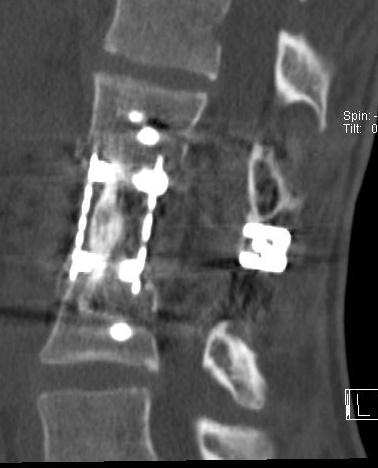
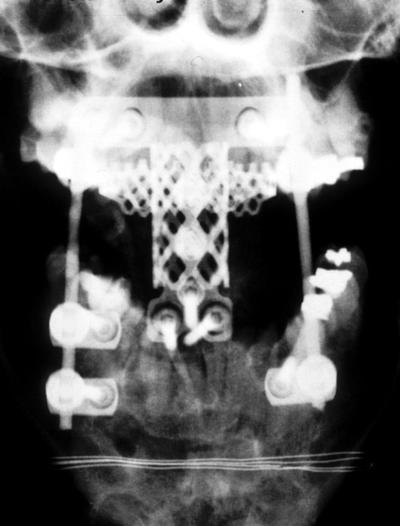
30y, m.
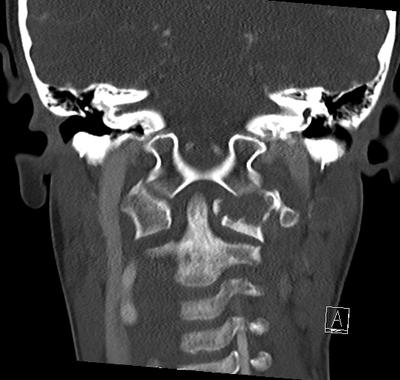
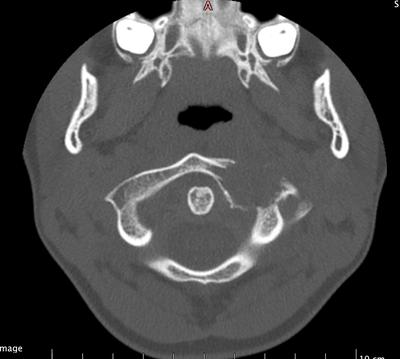
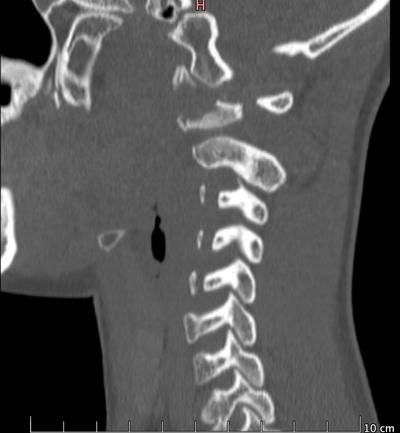
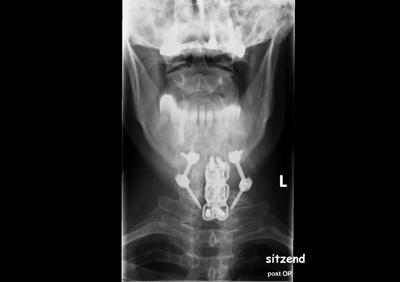
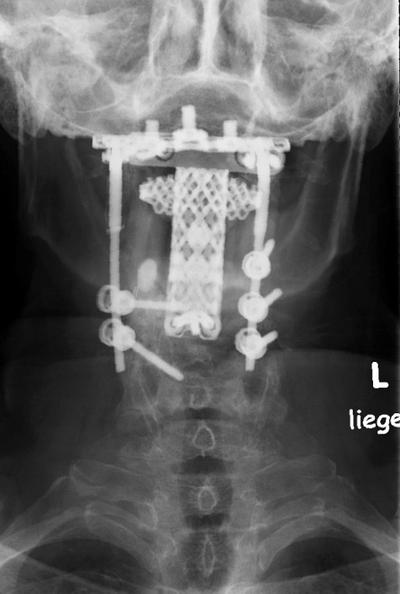
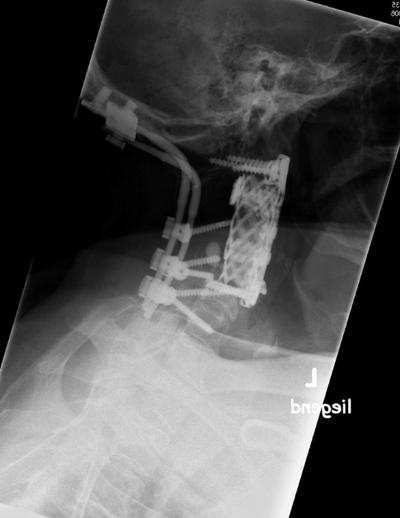
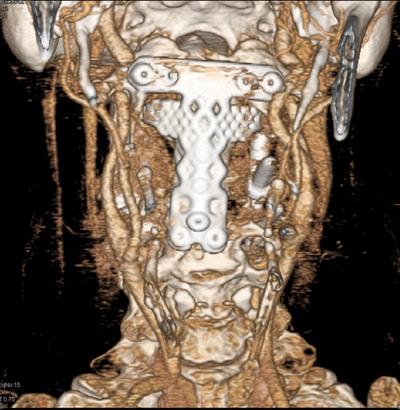
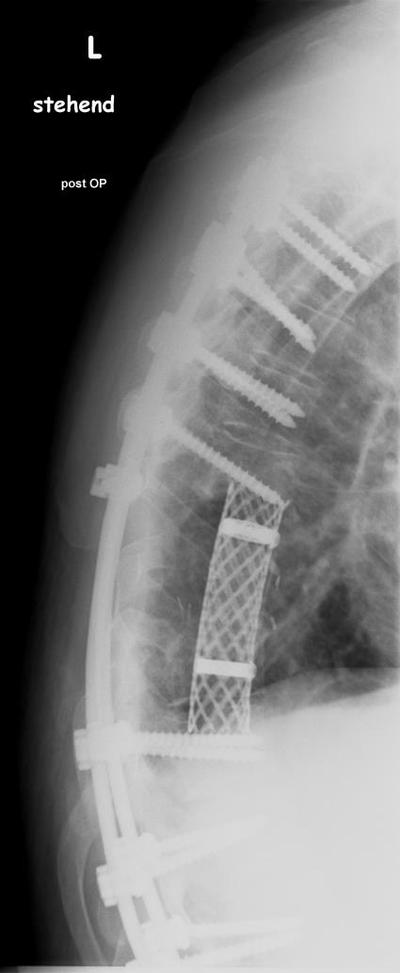
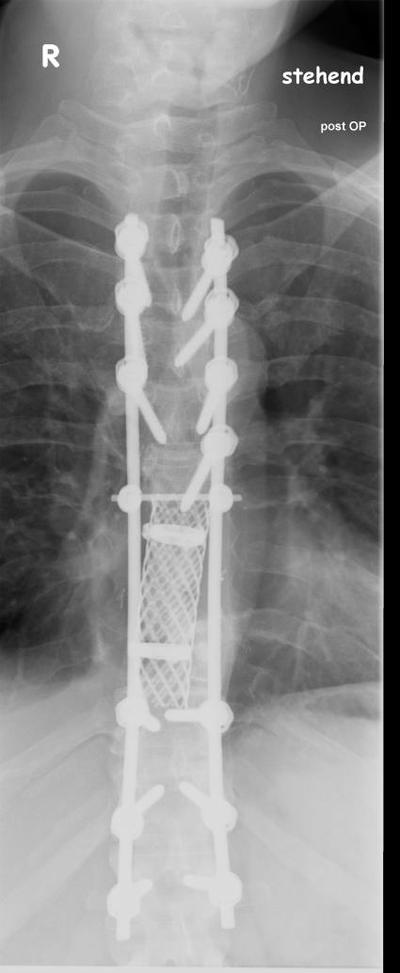
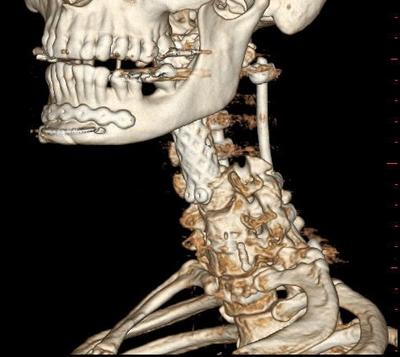
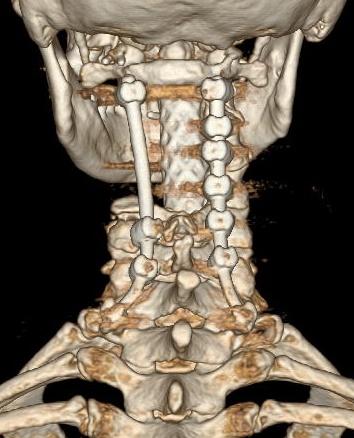
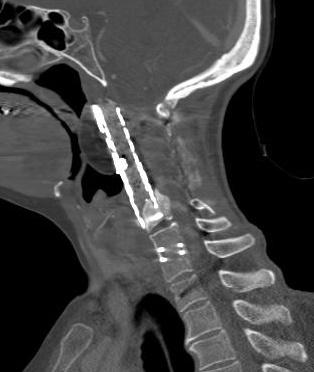
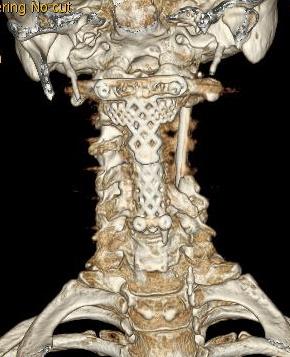
Recurrence of a chordoma C2+3
Anterior-posterior tumor resection, C2 replacement
09-1998
Tumor/ Localisations
malign (9)
benigne (7)
metastasis (8)
cervical (6), thoracic (14), lumbar (4)
Cancelous bone was added 6-12 months year after tumoresection (13)
TOTAL EN BLOC SPONDYLECTOMY: A REVIEW OF 24 CONSECUTIVE CASES
I. Branea, M. Ruf, G.Ostrowski, E.Salman, T. Pitzen
Kongress der Deutsche Wirbelsäulenchirurgische Gesellschaft, Frankfurt 2017
OP-Time: 3,75 Hrs. - 11,5, av. 7,5 Hrs.Days in hospital: average 25Bloodloss: average 2820 mlSurvival: 96% at 6, 92% at 36 Monate
Complicationrate: 46% Dural tear (4) LCR fistula (2) deep woundinfection (3) neurological deficit (2) Horner syndrome (2) ductus thor. lesion (2) rod/cage breakage (4) Tumor reccurence (3)
rate of patients having early postop complications was 65.8%.
the presence of complications was associated with prolonged hospital stay (p= 0.02).
Top 5 complications
Acute anemia (27.1%)
Hypokalemia (21.4%), hyponatremia (18.6%)
Paresis (8.6%)
Toxic hepatitis (8.6%)
arrhythmias (8.6%)
Intraoperative Blood Loss is Significantly Associated with early Complications in Cervical Spine Tumor Surgery
Iulian-Laurentiu Tiripa, Ute Heiler, Ioan Branea, Michael Ruf, Tobias Pitzen
Cervical spine research society, Paris 2021
injury of the vertebral artery (1.3%)
lesion of the dural sac (2.6%)
early implant failure (2.6%)
no transvers lesion (0%)
surgery related minor complications
superficial wound infection (6.57%)
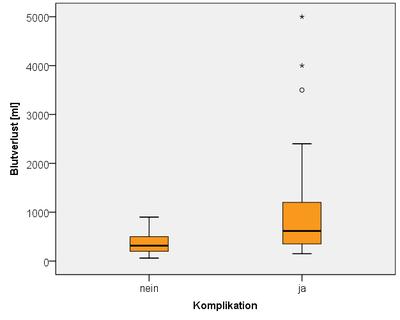
mean blood loss patients WITH complications : 933 ml
mean blood loss patients WITH complications : 364 ml
mortality in the first 2 weeks postop: 2.6%
Results
Yes
No
Complication
Blood loss (ml)
p< 0.001
Results
age (p = 0.667)
ASA (p= 0,825)
tumor entity (malign/ benign) (p= 0.935)
Blood Loss is the Problem!
Fusionsmass added 6 months postop!
nach 2 Jahren
frustrane Erst-OP mit PMMA und belassenem Tumor
Liquoransammlung
Spinal Reconstruction
Mechanical Stability after En-bloc Vertebrectomy
01/2007
66y, f.
Recurrence of a Chordoma C2-4, transoral resection, cage 10/2001
5y postop,:
Recurrence, mucosa dehiscence, infection, removal of the cage
09/2007
2y after new instrumentation
11/2009
Revision Cases (Anterior Approach)
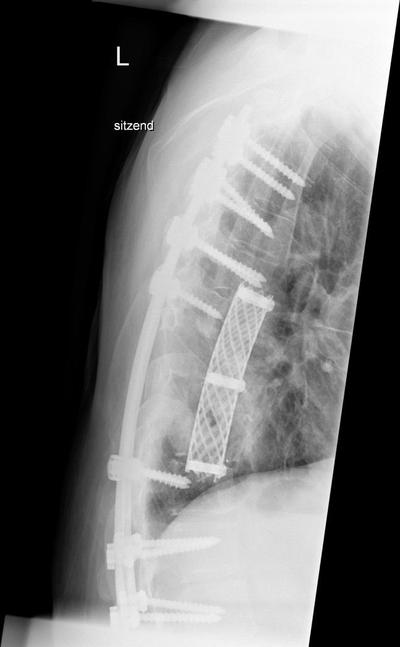
Case 1:
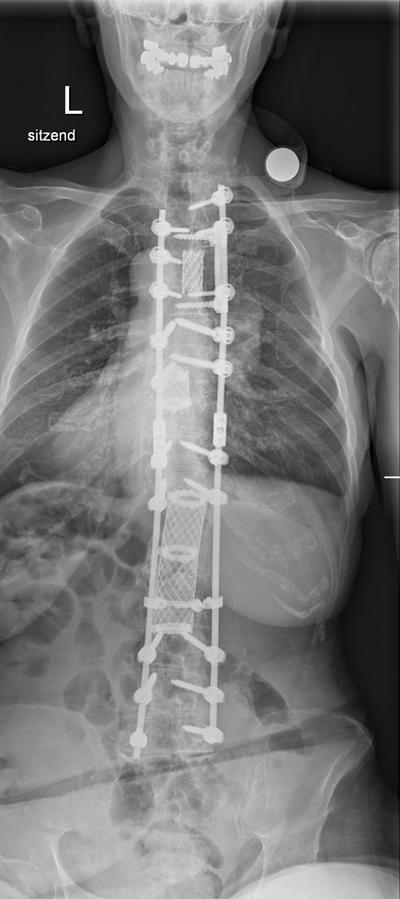
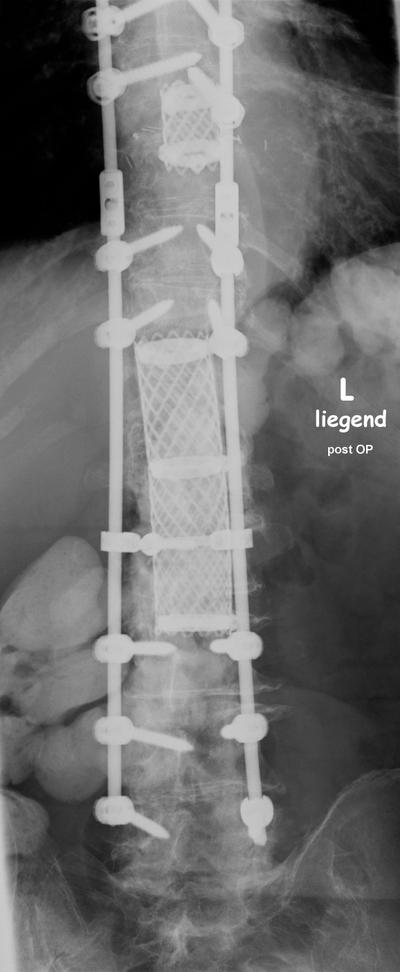
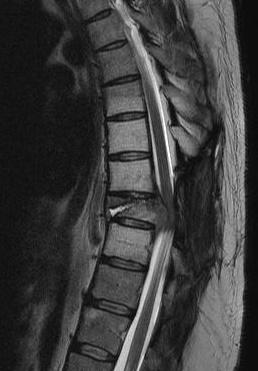
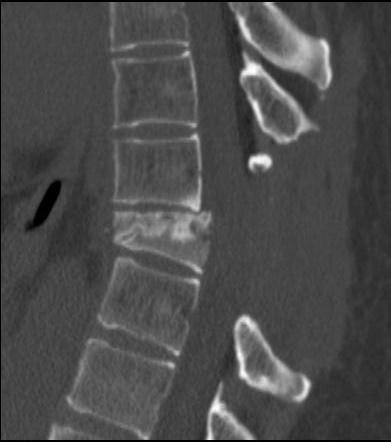
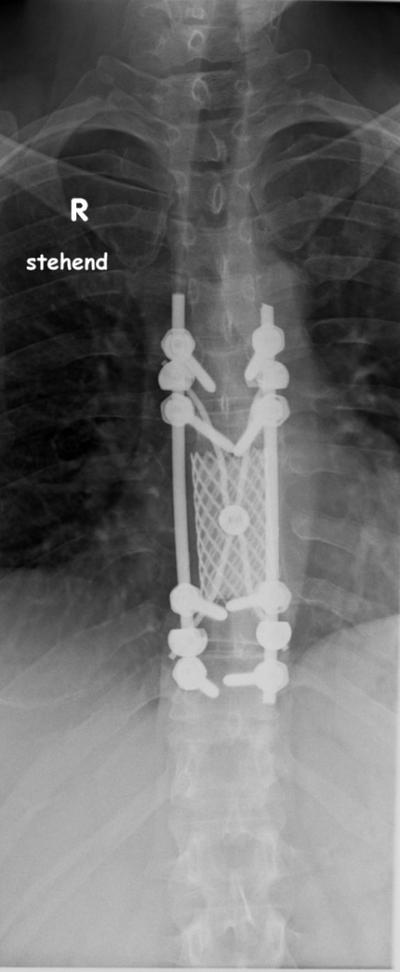
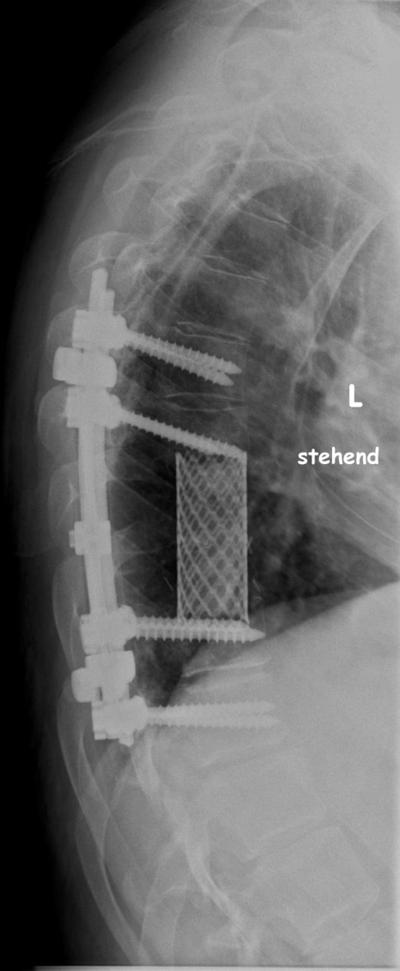
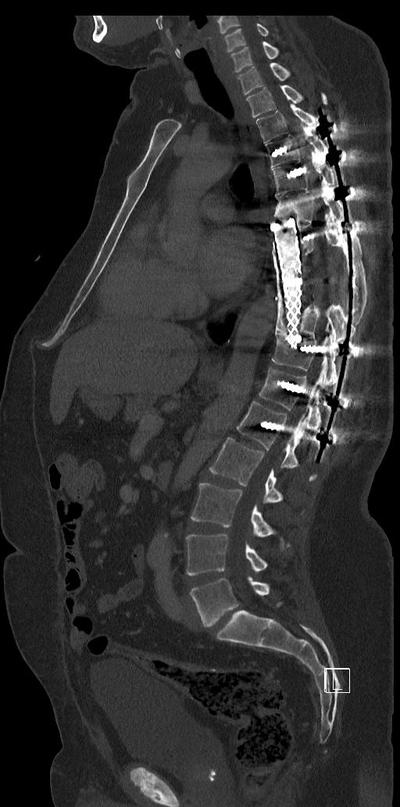
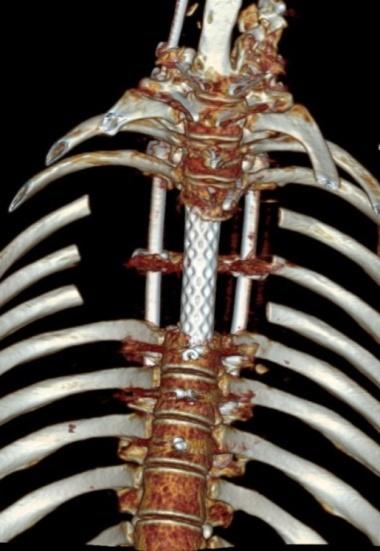
59y, f. Chordoma T12
02/2004
03/2008
11/2011
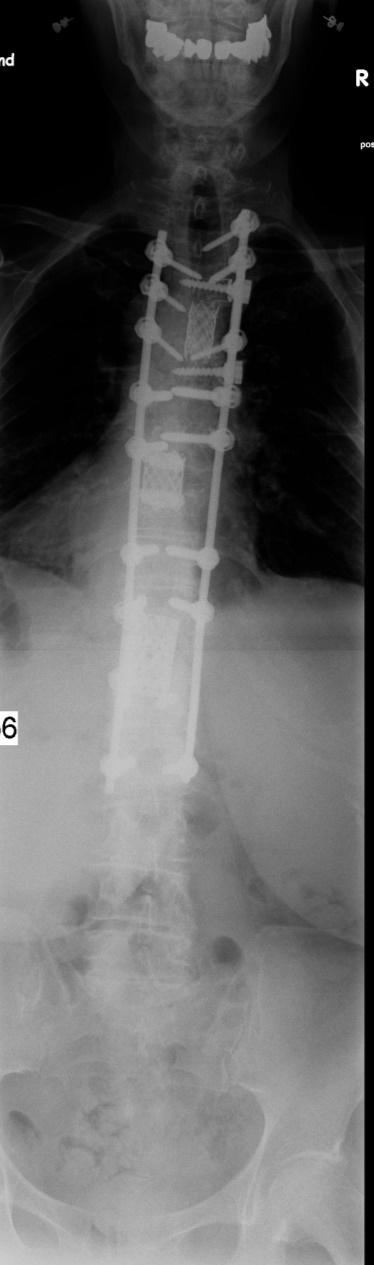
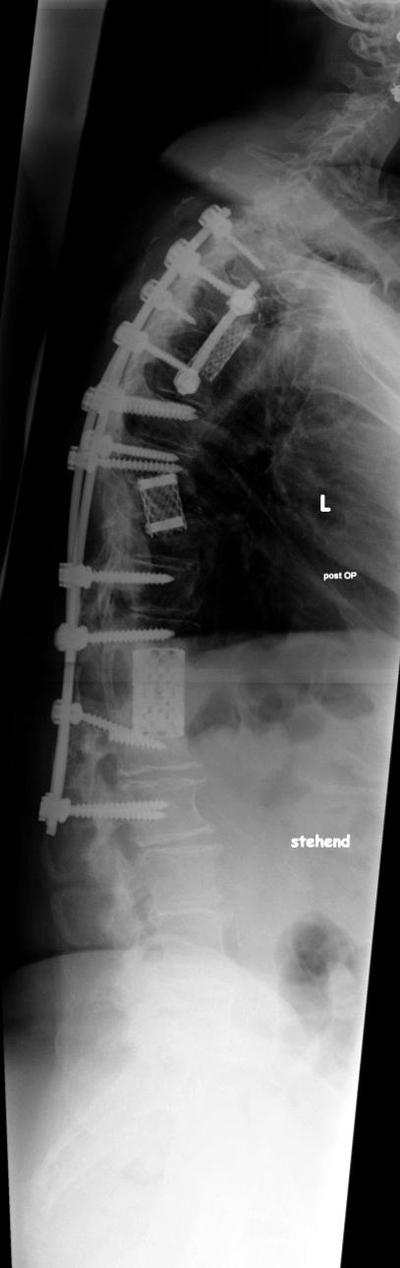
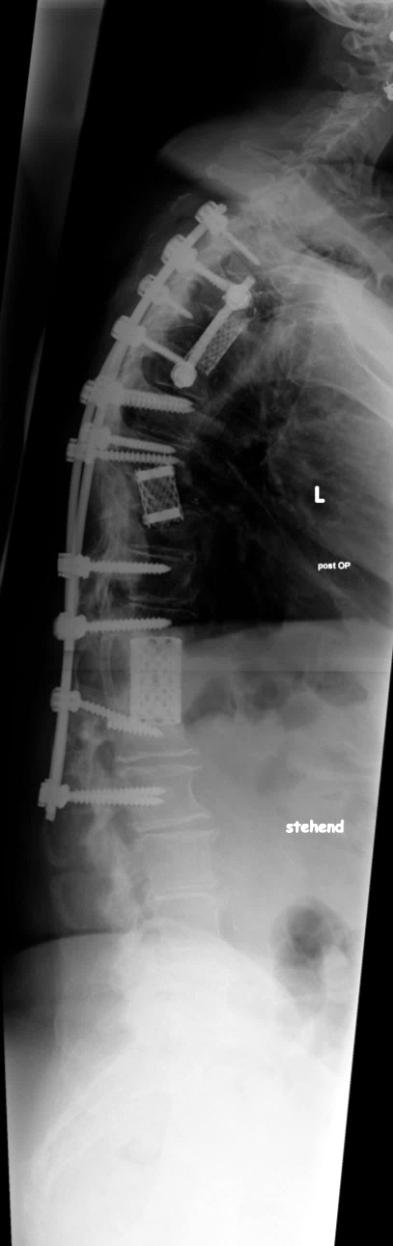
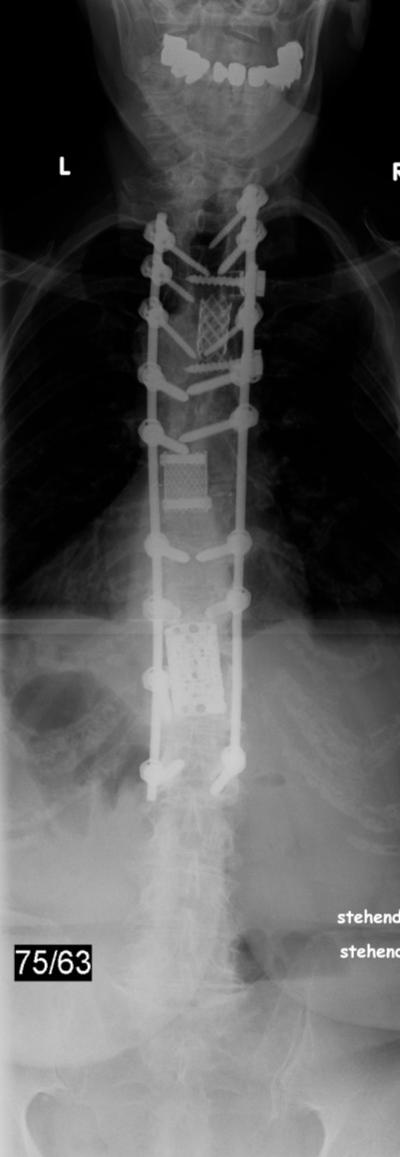
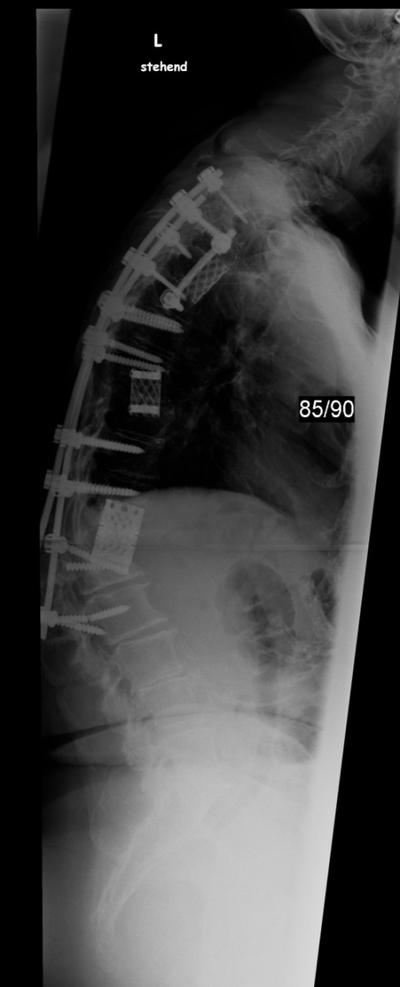
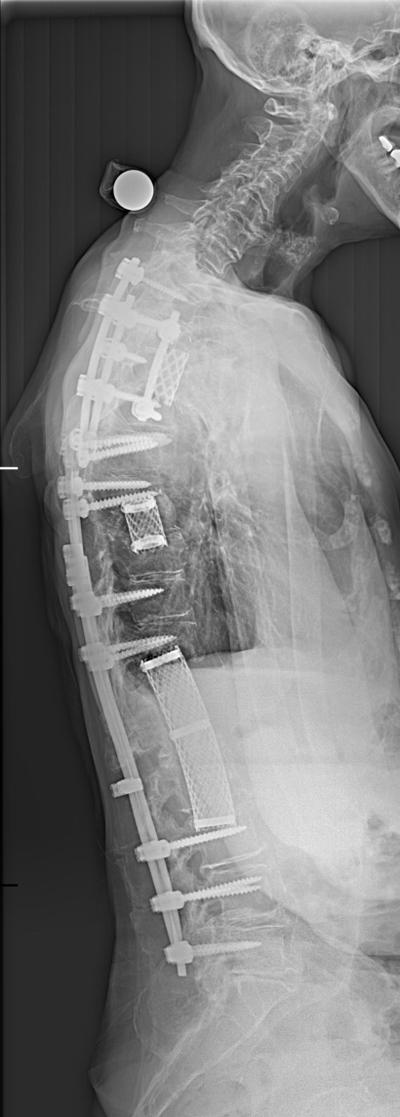
03/2004: En-bloc vertebrectomy T12
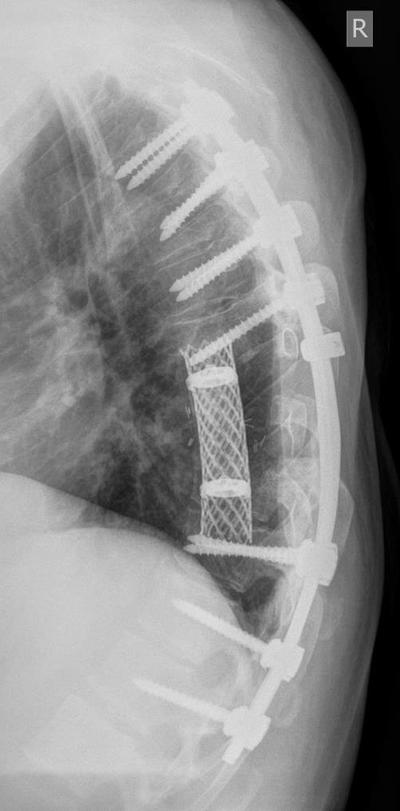
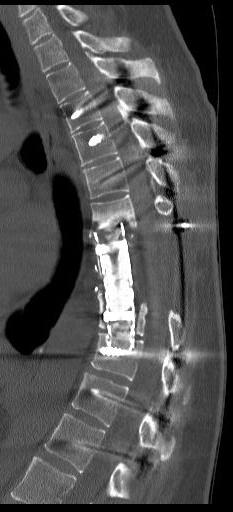
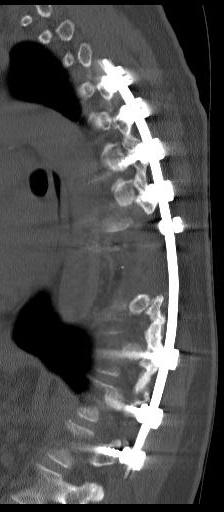
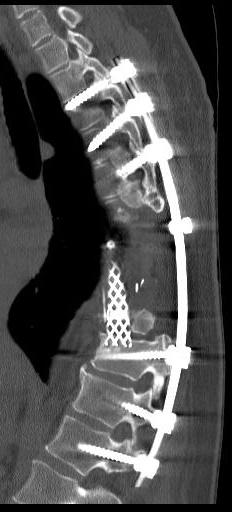
10/2009: En-bloc vertebrectomy T8
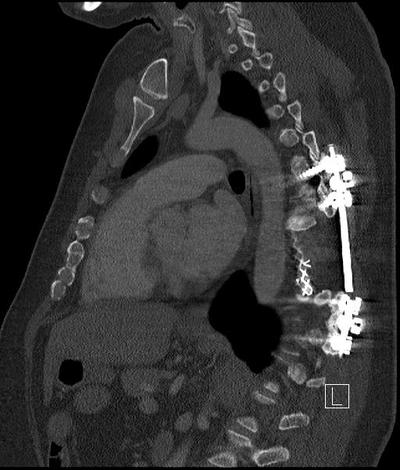
11/2011: Tumor T4, resection and instrumentation to T2
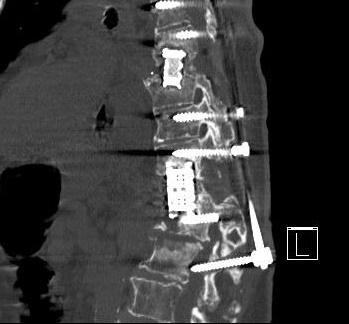
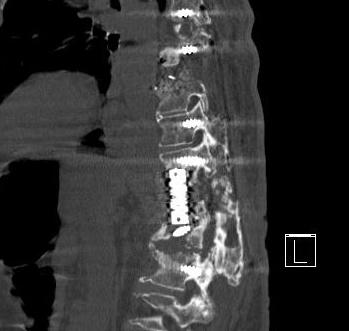
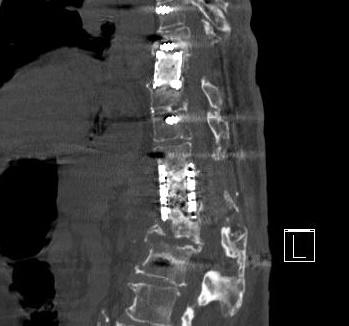
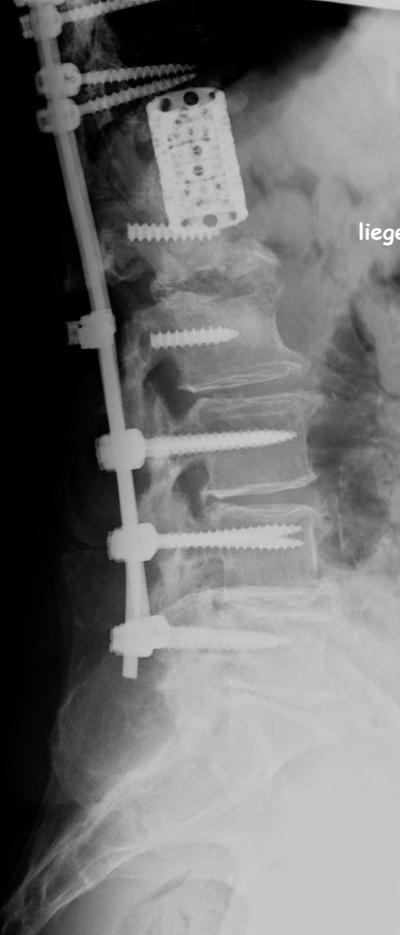
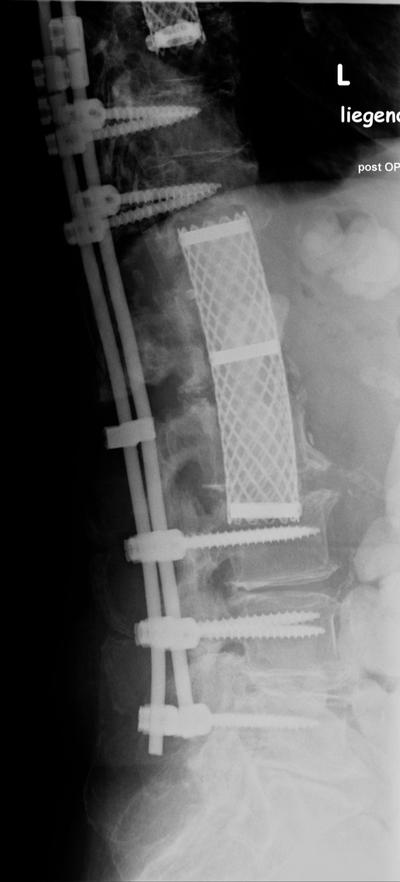
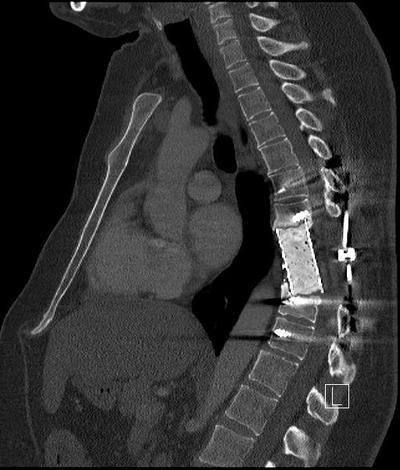
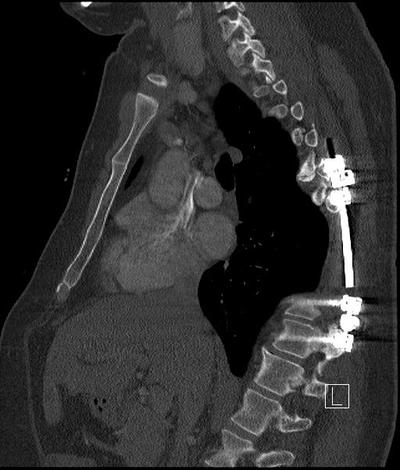
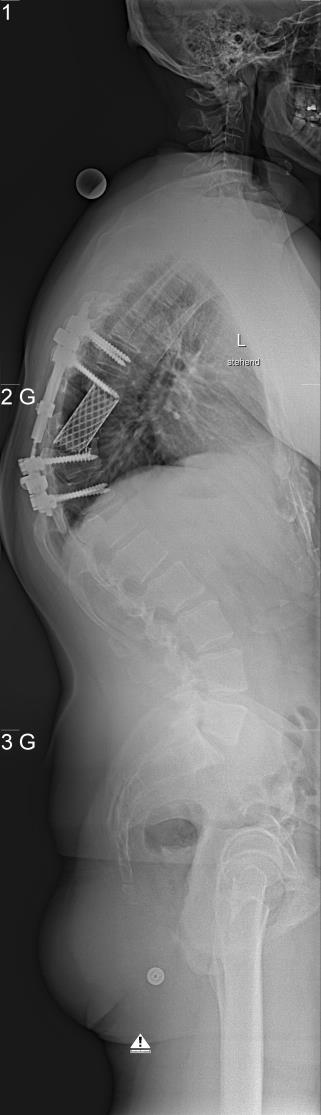
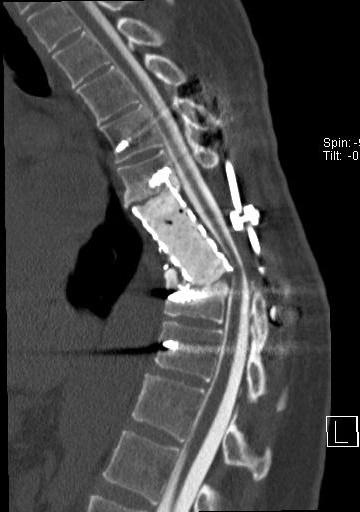
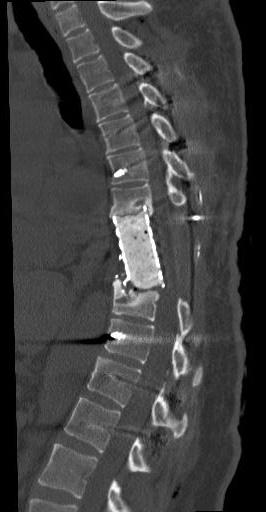
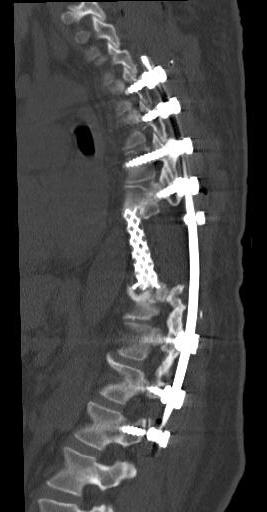
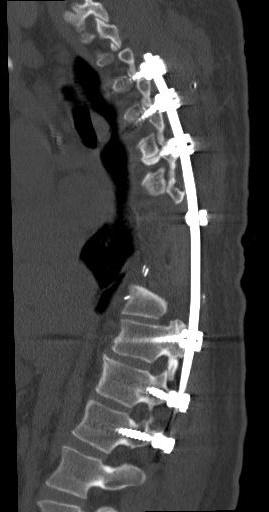
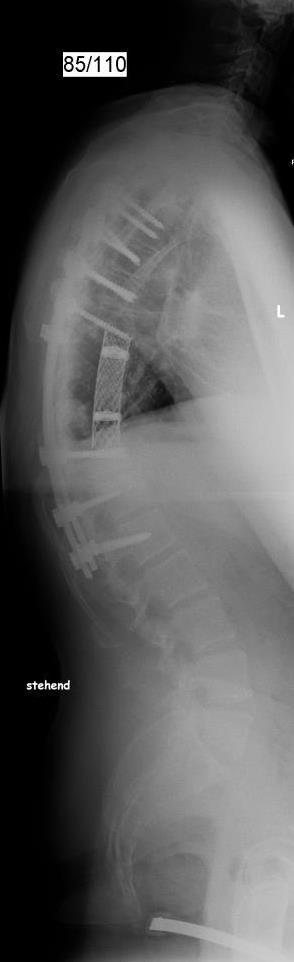
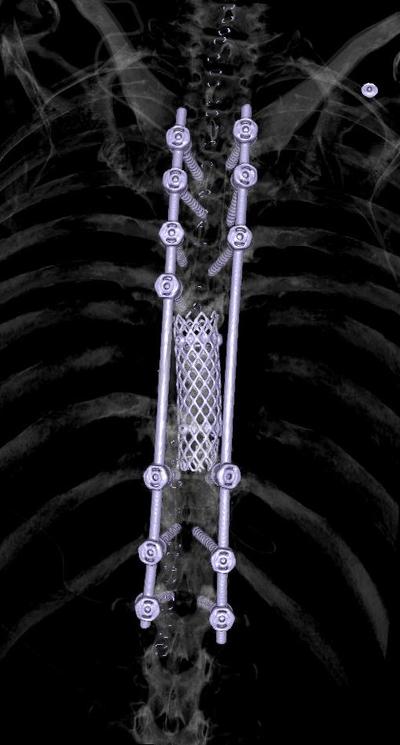
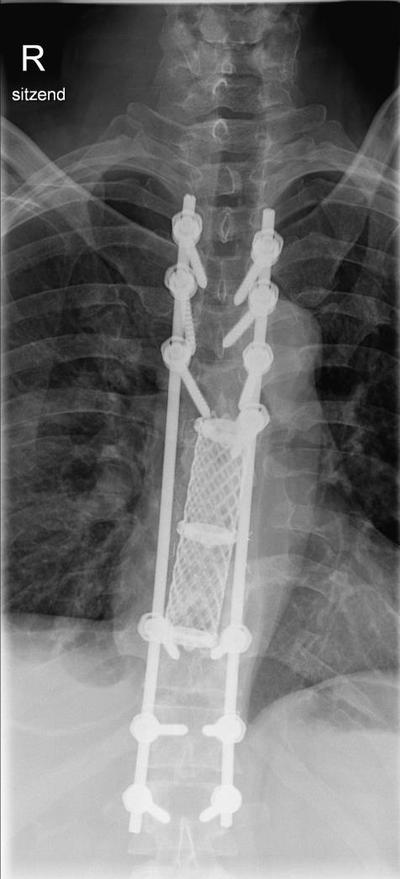
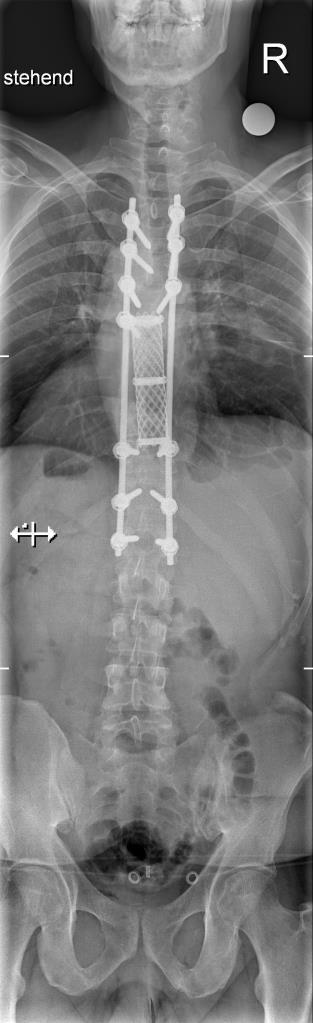
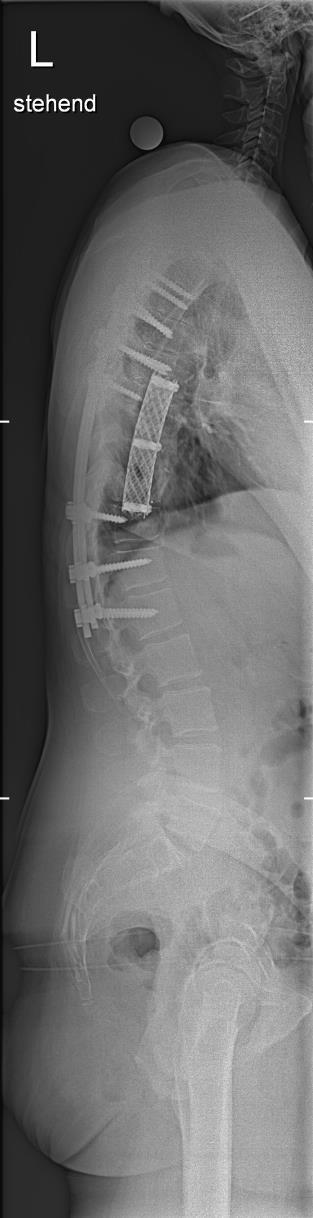
10/2014: instrumentation failure at L1/2 with kyphosis (no recurrence of tumor)
10/2014
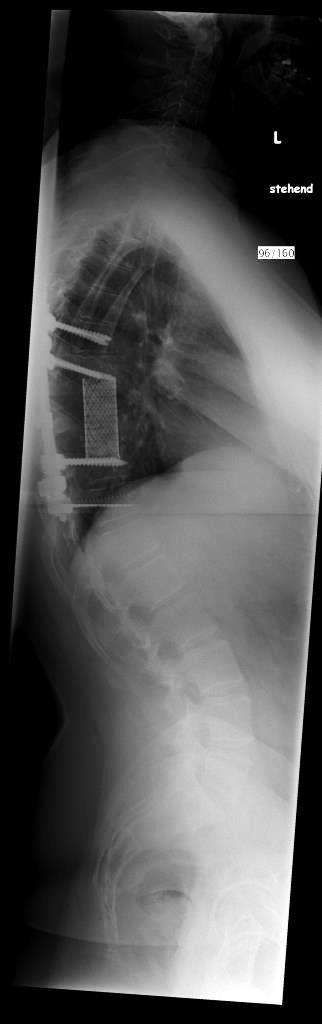
Mechanical overload due to the long lever arm?
10/2014
12/2014
07/2016
11/2014: anterior revision, partial corpectomy L1+2, new cage T11 to L3
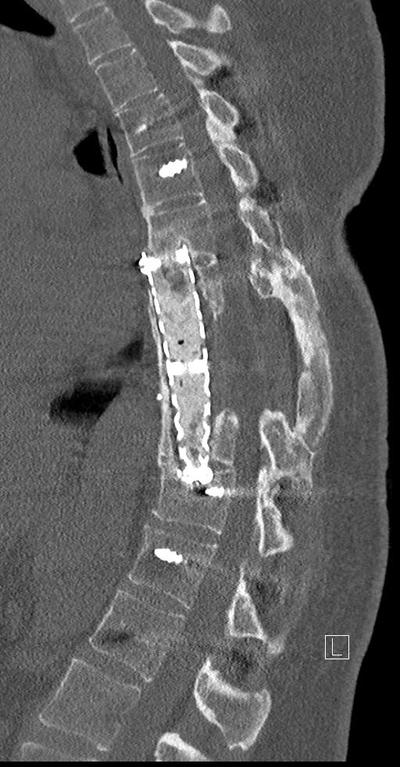
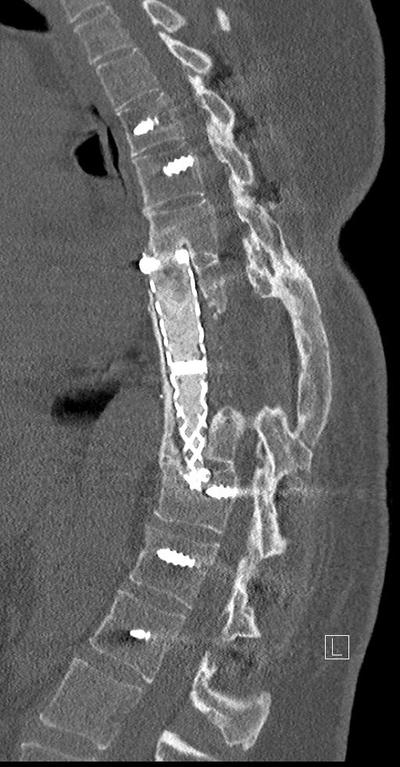
39y, m.
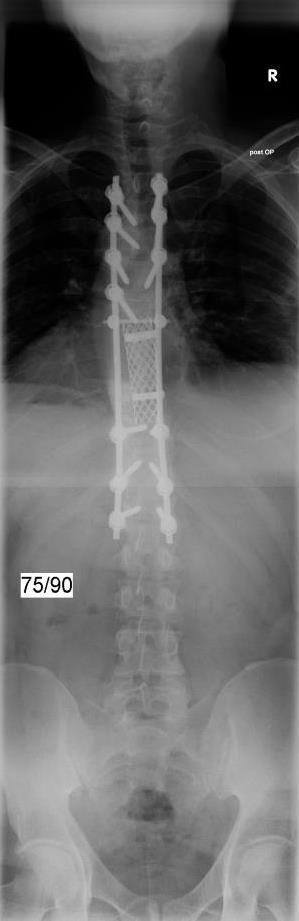
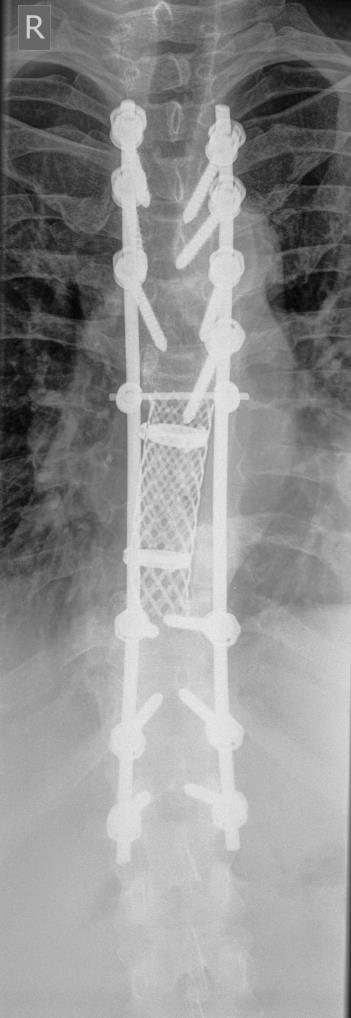
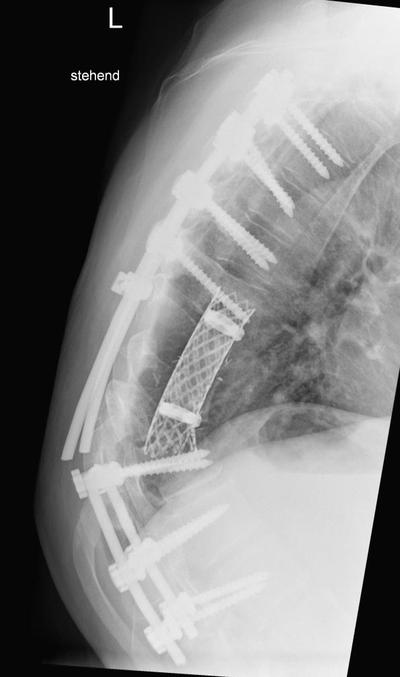
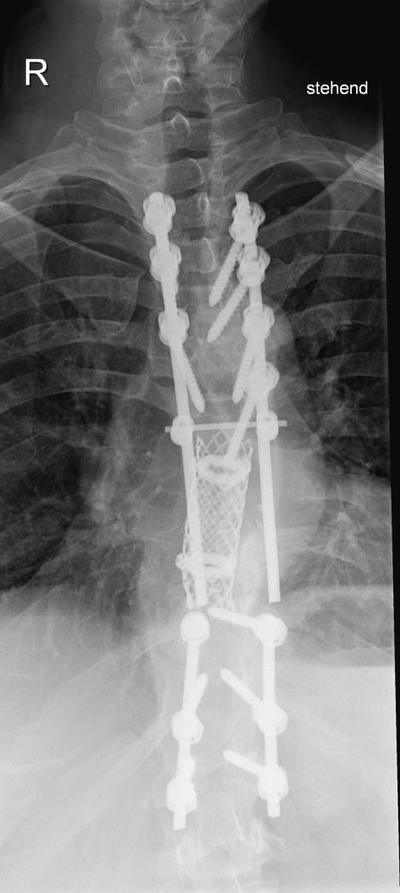
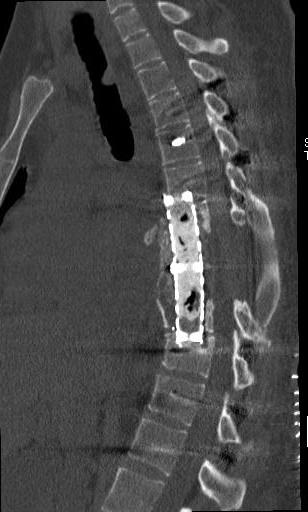
Malignant melanoma, metastasis T8/9, pulmonary metastases.
Status post posterior decompression, radiation 60gy
11/2006
12/2006
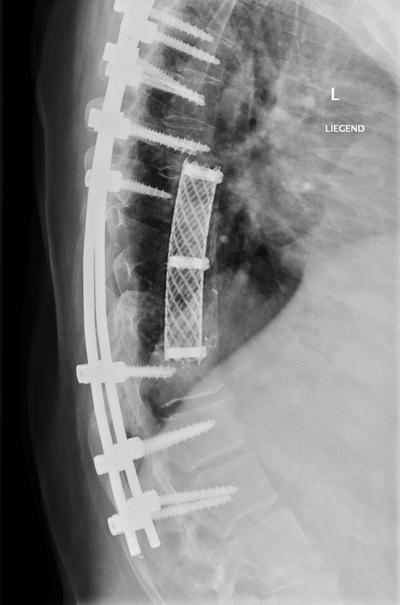
DVD vertebrectomy T8+9
Anterior support: cage filled with bone cement
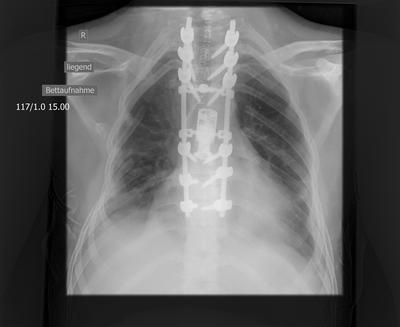
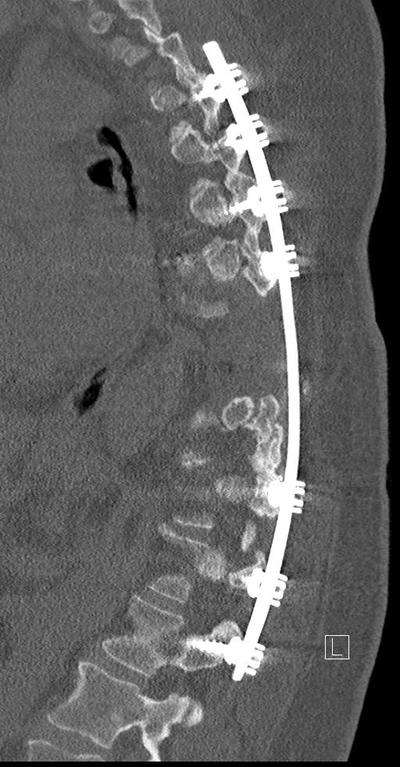
Posterior instrumentation: T6-T11
03/2007
3m postop.:
patient is completely mobilized, minimal subsidence
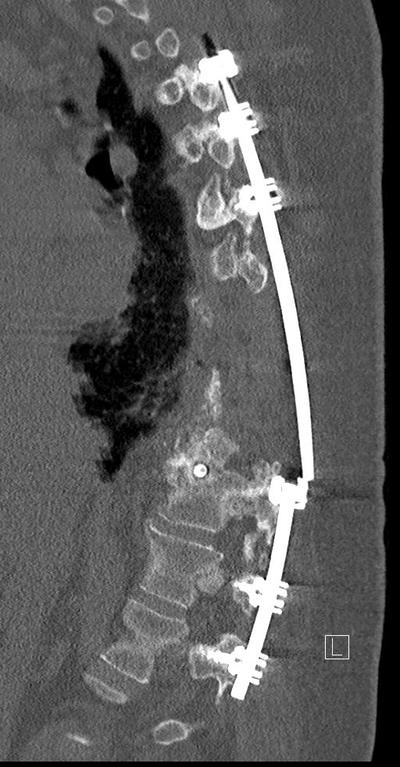
4y postop.:
breakage of the rods, revision recommended
10/2011
4.5y postop.:
acute paraparesis
First surgery (emergency):
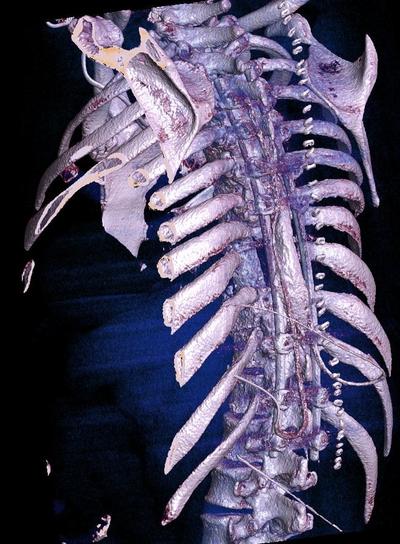
posterior revision with new instrumentation extended to T4 and L1, removal of the screws in T10
correction of kyphosis and translation
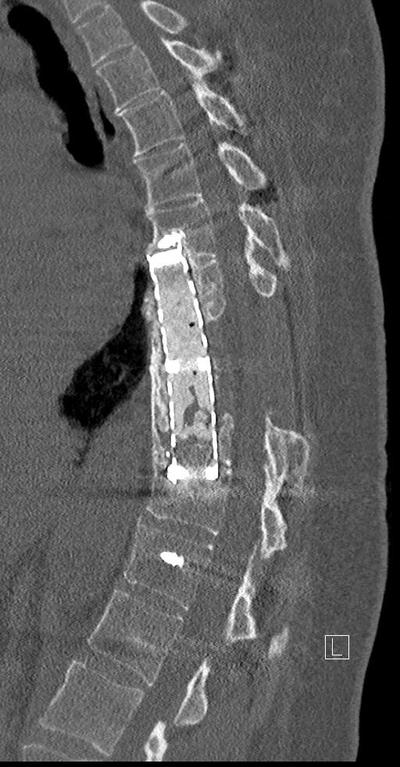
Second surgery (4d later):
Re-thoracotomy, removal of the cage, partial corpectomy T10
Insertion of a new cage, filled with bone cement in the center, autologous bone (rib) cranial and caudal
5m postop. 2:
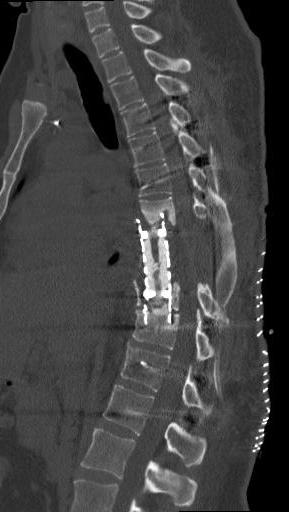
No bony ingrowth, subsidence
Biological problem, due to radiation?
6y postop. 1, 1y postop. 2:
Rod breakage again, breakage of the lower edge of the cage
First surgery:
posterior revision with new instrumentation T4 to L1
fixation of an autologous bone graft (posterior iliac crest)
correction of kyphosis and translation
Second surgery (14d later):
Re-thoracotomy, removal of the broken cage, partial corpectomy T7
Insertion of a new cage, filled with bone cement in the center, autologous bone (anterior iliac crest) cranial and caudal
Adding von cancellous bone around the cage
10y postop. 1,
5y postop. 2,
4y postop. 3:
Breakage of one rod
Breakage of the posterior bone graft at the lower fixation
New instrumentation
12y postop. 1,
7y postop. 2,
6y postop. 3,
2y postop. 4:
01/2018
no recurrence of tumor,
Stable?
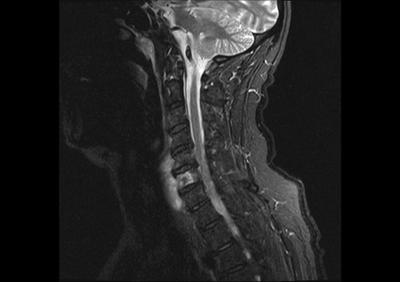
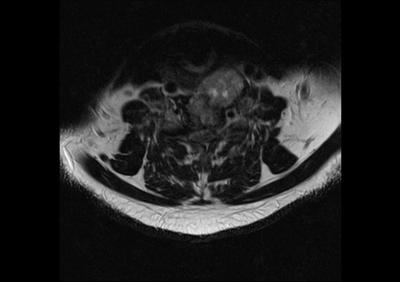
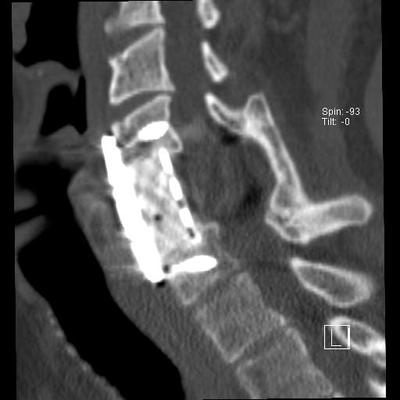
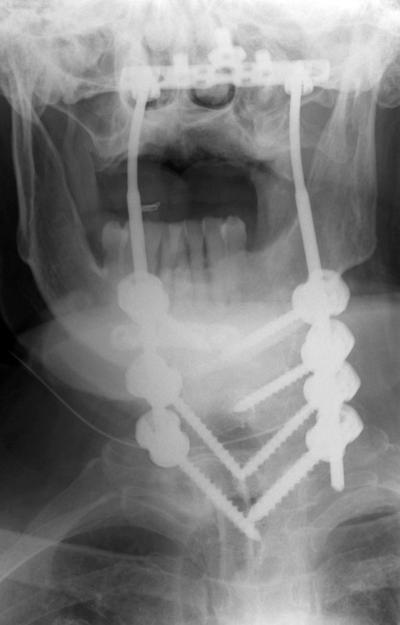
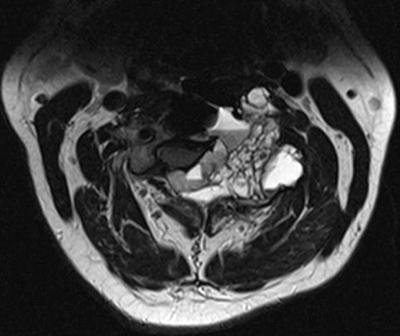
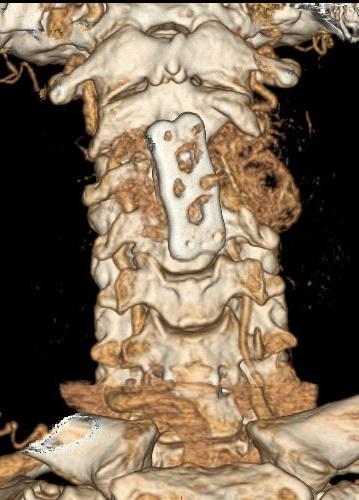
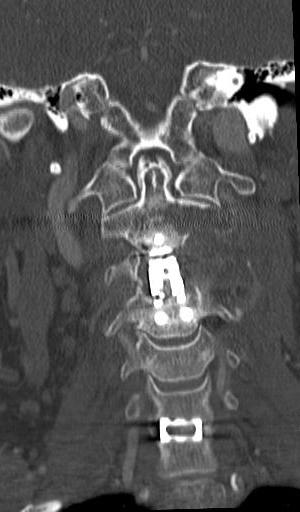
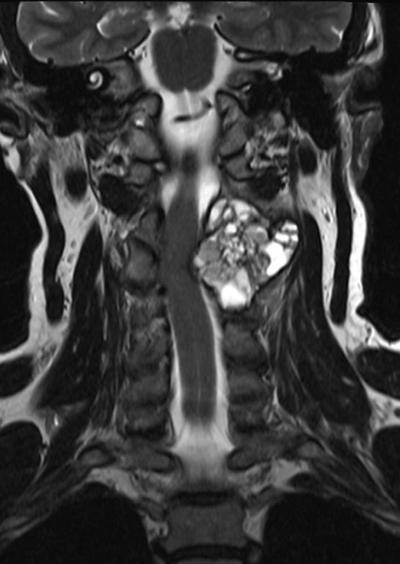
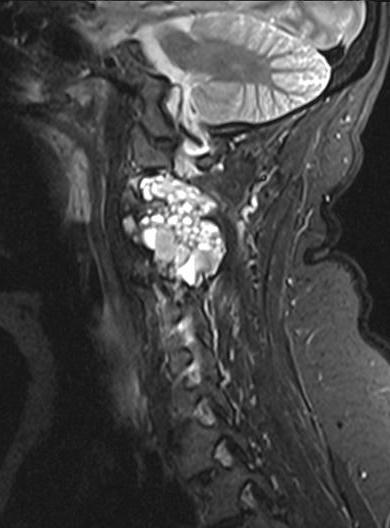
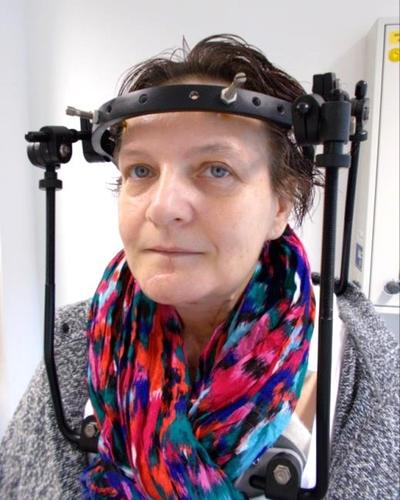
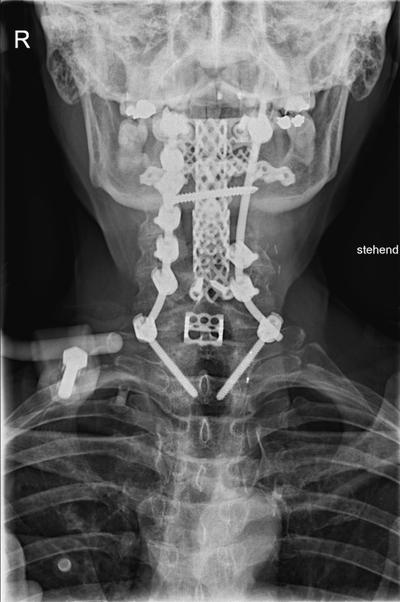
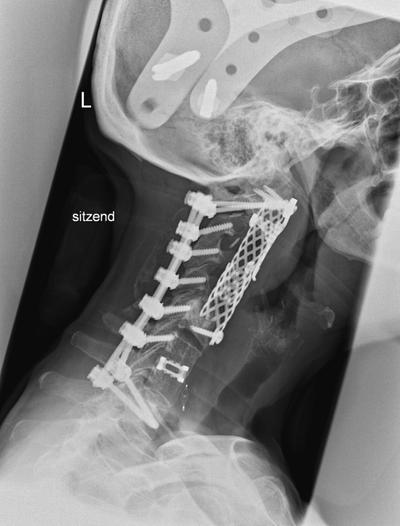
Reccurence of giant cell tumor C3 (incomplete resection 12/2014) Involvement of the left vertebral artery. Paraparesis.
Previous disc herniation C6/7.
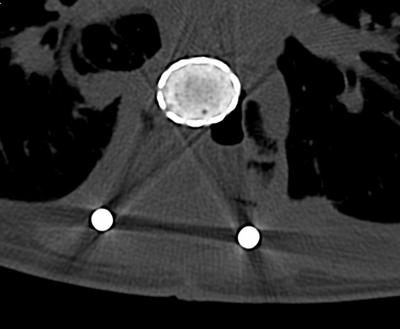
Tumor resection, stabilisation with cage C1-5, instrumentation C1-T1 (11/2015)
6m postop.:
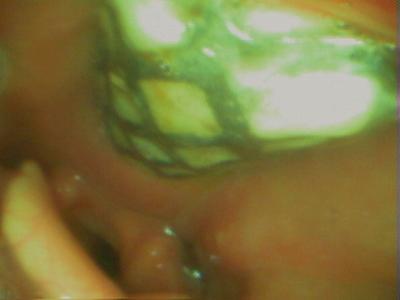
Perforation of the retropharyngeal mucosa, infection
Revision with a transoral (with mandibula/ tongue split) and,a high anterior approach:
Insertion of a new cage, cutis/subcutis flap, vascular anastomised
09/2017
06/2016
Current Concept
First step: Stabilisation with anterior spacer and posterior instrumentation according to the mechanical requirements
Advantage: good visualisation of potential recurrence
Second step: Addition of a autologous bone graft in long-term survivors without recurrence for long-lasting stability
Stable primary instrumentation
(anterior support, posterior instrumentation, cave shear and rotational forces)
Meticulous planning of surgery
(thoracic/ vascular surgeon, staged procedure)
Anticipate - cicatricial tissues
- postradiation adhesions
- osteoporotic bone (stress shielding)
- extensive bone defects
Consider Addition of autologous bone graft in long-term survivors without recurrence of tumor
Thorough preop workup (interventional radiology incl.)
Experienced anesthesiology and intensive care unit
massive bloodloss
high complication/revision rate
long hospital stayis NOT asociated with perioperative mortality
demands a CENTER with solid experience in tumorsurgery/ complications management
Radical excision of spinal tumors whenever indicated and technically feasible…