Wissenschaft & Forschung
inovație

Innovation & Forschung

Wissenschaftliche Beiträge und Kongressvorträge in der Wirbelsäulenchirurgie — von Facettenersatztechnologie (TFAS) über Skoliosenkorrektur bis zur En-bloc-Tumorresektion.

Wissenschaftlicher Vortrag
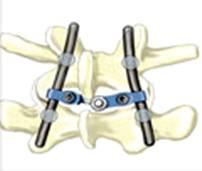
TFAS — Erste Erfahrungen mit einer neuen Technologie zum Ersatz der Facettengelenke

31 Folien · S. Webb, R. Prejbeanu, I. Branea, D. V. Poenaru, D. Vermesan · Florida Spine Institute Clearwater + Timișoara
Slide 1

TFAS – Early Experience with a New Technology for Replacement of the Facets

S. Webb1, R. Prejbeanu2, I.Branea3, , D. V. Poenaru3, D.Vermesan21Florida Spine Institute –Clearwater, SUA21st Department Of Orthopedics And Traumatology Timisoara 3 2nd Department Of Orthopedics And Traumatology Timisoara

Slide 2

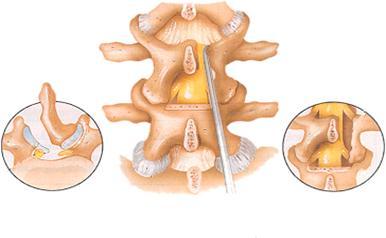
Current Therapy for Spinal Stenosis

Laminectomy surgery

Low back incision

Removal of all or part of the posterior spine

Enlargement of neural foramina to free the offended nerve root

Concurrent fusion to stabilize the spine

Application of bone graft harvested from the hip

Usually involves implantation of hardware to prevent motion until fusion is complete

Slide 3

Limitations of Current Therapy

Procedural complications

Nerve injury associated with decompression due to limited visualization

Incomplete fusion requiring re-intervention

Hip pain associated with bone graft harvesting

Long term issues related to fusion

Changes the normal biomechanics of the spine and accelerates degeneration at adjacent spine segments

Bone regrowth after decompressive laminectomy is accelerated in areas of postoperative spinal instability

Repeat decompression is estimated to be 11% at 6 years

Slide 4

Motion Restoration:An Introduction

Slide 5

Potential Benefits of Posterior Motion Devices

Stabilization with controlled kinematics

Load sharing with anterior and other posterior structures

Symptom relief

Reduction of morbidity of traditional fusion surgery

Tissue sparing (bone)

Role of natural anatomy (patho-anatomy)

Potentially excising pain generators

Familiar (Posterior) surgical technique

Direct decompression

Facet visualization

Ease of revisions

Slide 6

Motion vs. Fusion

In order to provide a better outcome to the patient in terms of functionality and reduced incidence of complications, “non-fusion” devices should be designed to

Preserve available motion

or preferably

Restore normal motion

but always

Restrict abnormal motion

The advent of non-fusion spinal implants necessitates the accurate characterization of the biomechanics of the posterior elements of the spine, especially the facet.

As artificial disc and nucleus replacements make their way to the market, their biomechanics have been studied and characterized, with a special focus on the effect of such implants on

the biomechanics of adjacent segments

the biomechanics the corresponding facet joints.

This has been done in an effort to ensure that post operatively, their function will be clinically successful, and that an additional potential failure mode has not been created at the other (facet) joints

Slide 7

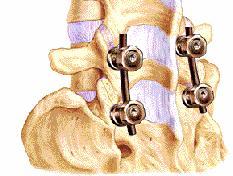
Facet Arthroplasty

TFAS™ Archus Orthopedics

Modular design approach

Maximizes alignment flexibility

Addresses sizing requirements

Attached to spine via pedicle

Similar to attachment of pedicle screws for fusion hardware

Leverages extensive clinical experience and technical understanding of TJR

Restores stability while maintaining full range of motion

Slide 8

Total Facet Arthroplasty

An Introduction to the Technology

Slide 9

Clinical Indications for TFAS™

TFAS™ is an articulating joint prosthesis intended to restore normal motion and provide stabilization of spinal segments in skeletally mature patients.

It can be used as an adjunct to laminectomy, laminotomy, neural decompression and facetectomy, in lieu of fusion, for the treatment of instabilities or deformities of the lumbar spine including:

Degenerative disease of the facets

Degenerative disease of the facets with instability

Grade I degenerative spondylolisthesis with objective evidence of neurologic impairment

Central or lateral spinal stenosis

Slide 10

Clinical Benefits of Total Facet Arthroplasty

Complete versus partial removal of facets

Allows for safer, more comprehensive decompression

Eliminates the possibility of further degeneration and recurrence

Removes a potential source of low back pain

No fusion

Patient gets full range of back motion

Normal spine biomechanics are restored preventing future adjacent segment issues

No bone graft harvest procedure and associated pain

Biomechanics

Stabilize the spinal segment

Preserve segmental biomechanics

Avoid fusion and therefore minimize stress on adjacent levels

Slide 11

Design Specifications

Slide 12

Design Specifications: Motion

IAR in posterior third of VB

Slide 13

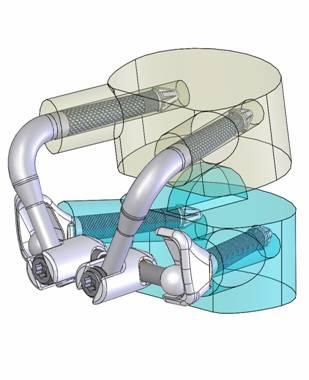
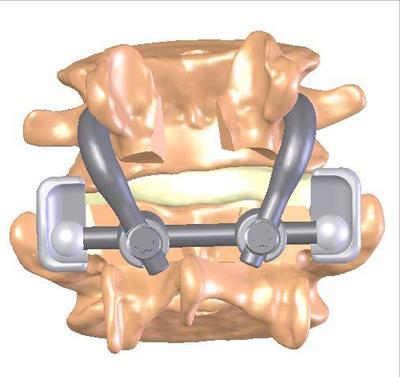
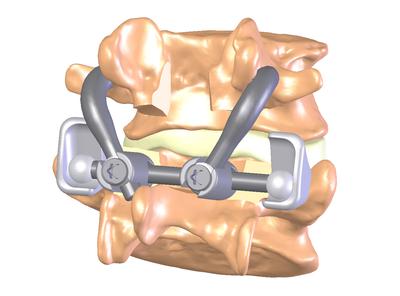
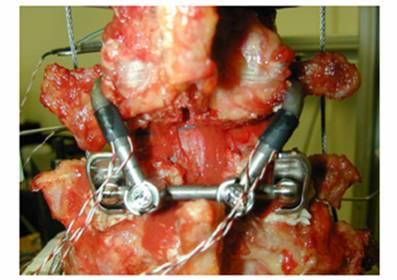
TFASTM Implant Features

Cephalad Arm

Cross Arm

Housing with Hexalobe Set Screw

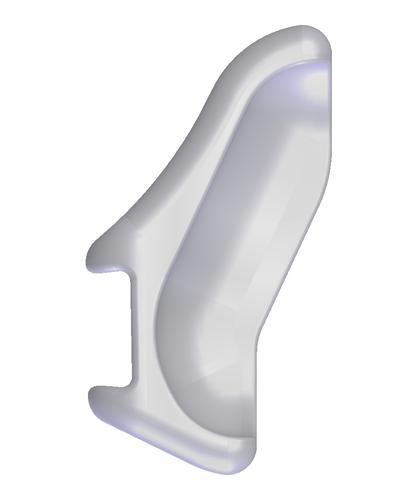
Caudal Bearing (Cup)

Cephalad Bearing (Ball)

Slide 14

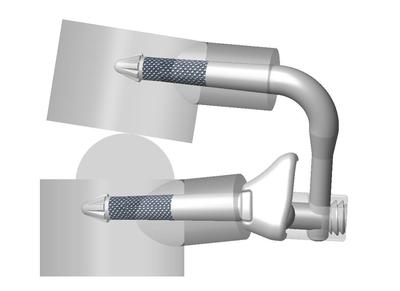
TFASTM Implant Features

Caudal Stem

(5.75 & 6.5 mm)

Integral Cone Tip End

Caudal Bearing

Cephalad Stem

(5.75 & 6.5 mm)

Clamp Housing with Hexalobe Set Screw

Cross Arm with Cephalad Bearings

Archus Bone Cement

Tecotex® Surface

Slide 15

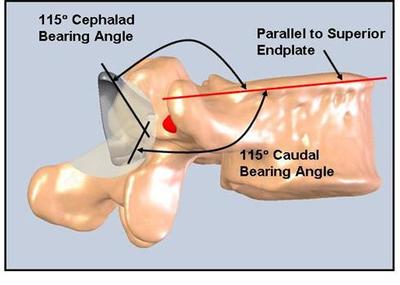
Caudal Bearing Features

Bearing Ramp Angles:

115º flexion

115º extension

Stabilizes motion

Motion Limits:

Prevent dislocation

115º

Extension Stop

Flexion Stop

Home Position

Endplate

115º

Slide 16

TFAS™ Technical Summary

Slide 17

Validation of Total Facet Arthroplasty

Strength

Modularity

Wear

Stability

Fixation

Slide 18

Articulation Durability

Wear Couple

Custom designed coupled motion simulator

Volume of CoCr debris comparable to that reported in literature

Particle size and distribution comparable to state of the art MOM hips

TFAS™ bearing wear = low end of metal-on-metal TJA at 10 million cycles

No neurotoxic/toxic response locally/systemically in vivo

Slide 19

Kinematics

The TFAS™ effectively

stabilizes motion in flexion and lateral bending

restores the motion in extension

limits the motion in axial rotation

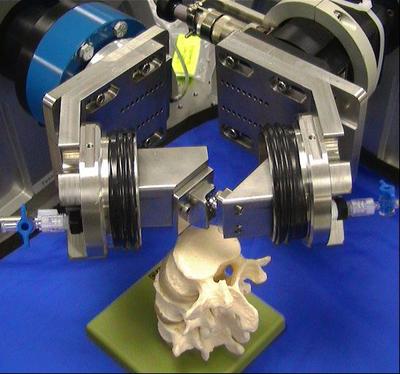
TFAS™ restored motion of an unstable FSU (no facets or posterior ligaments) to that of an intact FSU, allowing anatomic range of motion in all degrees of freedom

TFAS™ Kinematic Testing

Slide 20

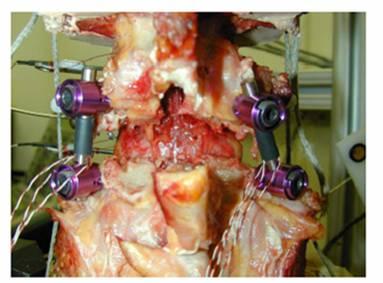
Simulated In Vivo Loading

TFAS™:

Pedicle Fusion System:

Under the same applied loads, TFAS™ experienced lower implant stresses

Slide 21

Intradiscal Pressures

TFAS™ treated level loads the disc similar to an intact level

Slide 22

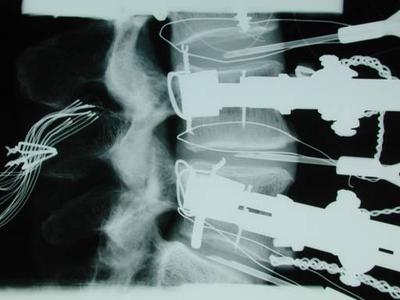
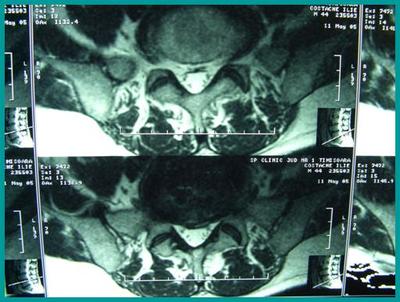
First clinical cases performed – Romania, Timisoara

Nine patients: 6L4-L5/3 L3-L4 (f. u only 6)

Average age 71.2

dg: lumbar stenosis

Instrumentation time 1-2hr, operation time 4 hr

Slide 23

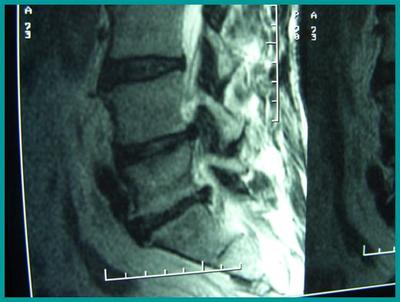
TFAS™ Patient Pre-op MRI

Slide 24

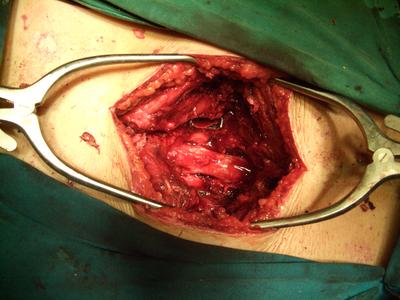
Algoritm

Posterior approach

Decompression

Resection of inferior articular process

Transpedicular instrumentation (proximal first)

Measurement and probe (always double check)

Ciment

fixation

Slide 25

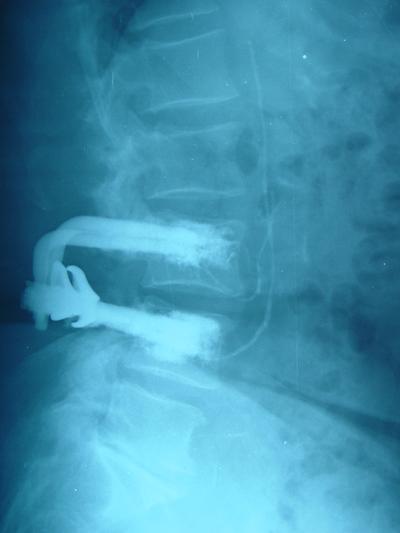
Clinical Studies

Female 65 y

Spinal stenosis

TFAS L4-L5

6m FU

Slide 26
Slide 27

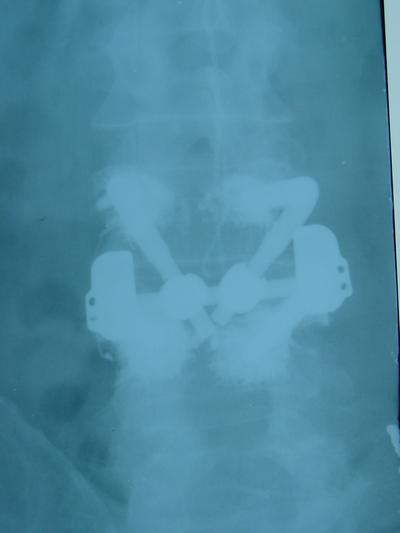
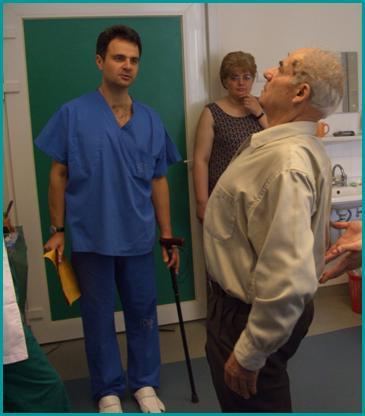
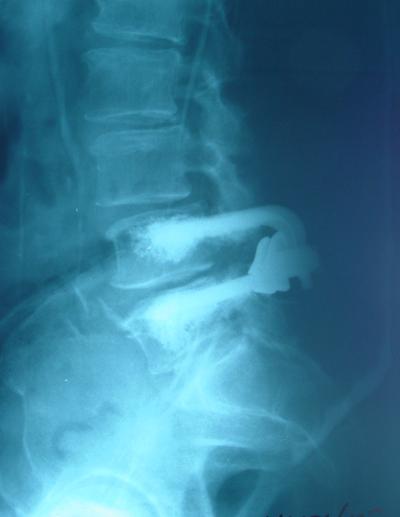
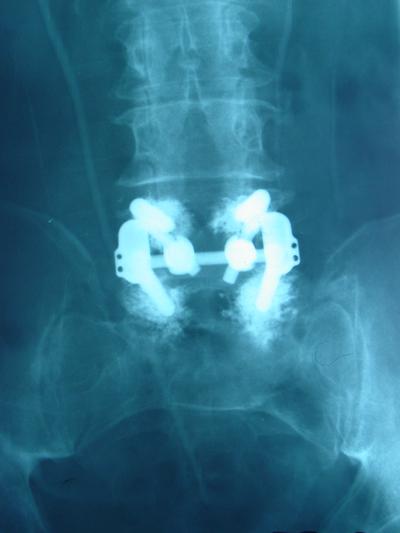
Current Clinical Status

Male 74y

Spinal stenosis with spondilolistesis L4-L5 Gr. I

TFAS L4-L5

6 m FU

Slide 28
Slide 30

Now

IDE approved in the U.S.

Recruiting investigative centers

Conducting cadaver training sessions

Enrollment in U.S. is underway – 2 patients

Slide 31

Conclusions

TFAS an strong alternative to fusion in treatment of Lumbar Spinal Stenosis in the near future

Peer-Reviewed Publikationen

2010

Mikrochirurgische Dekompression der lumbalen Spinalkanalstenose

Drumm J, Branea I, Pitzen T
Der Orthopäde, Juni 2010
DOI: 10.1007/s00132-009-1593-5 PMID: 20480133
2006

Unsere Erfahrung mit orthopädischer Chirurgie bei Hämophilen

Poenaru DV, Serban M, Branea IL, Pătraşcu JM
Srpski arhiv za celokupno lekarstvo, 2006
PMID: 16915756

Kongressvorträge & Fallpräsentationen

2023

Chirurgisches Management von Wirbelsäulentumoren

I. Branea
Bukarest, Oktober 2023
Mehr →
2021

Intraoperativer Blutverlust und frühpostoperative Komplikationen in der zervikalen Wirbelsäulentumorchirurgie

Tiripa I-L, Heiler U, Branea I, Ruf M, Pitzen T
Cervical Spine Research Society, Paris 2021
Mehr →
2017

Totale En-bloc-Spondylektomie: Review von 24 konsekutiven Fällen

Branea I, Ruf M, Ostrowski G, Salman E, Pitzen T
Kongress der Deutschen Wirbelsäulenchirurgischen Gesellschaft, Frankfurt 2017
Mehr →
Vortrag

TFAS — Erste Erfahrungen mit einer neuen Technologie zum Ersatz der Facettengelenke

Webb S, Prejbeanu R, Branea I, Poenaru DV, Vermesan D
Florida Spine Institute Clearwater (USA) + UMF Timișoara
Mehr →
Vortrag

Der dorsale Zugang in der Wirbelsäulenchirurgie — wie weit können wir gehen?

I.L. Branea
Wissenschaftlicher Vortrag, 56 Folien
Mehr →
Vortrag

Larsen-Syndrom: frühzeitige 360°-zervikale Fixation und Fusion

Branea I-L, Ruf M, Pitzen T, Jeszenszky D, Tiripa I
Rhein-Neckar Wirbelsäulenzentrum (Heidelberg) + SRH Karlsbad + Schulthess Klinik (Zürich)
Mehr →
Vortrag

Kombinierter anteriorer-posteriorer Zugang bei idiopathischer Skoliose

I. Branea
Bukarest — Center for Spine Surgery, Orthopedics and Traumatology, SRH Klinikum Karlsbad-Langensteinbach
Mehr →